Validate a YouTube video idea before spending a week on it
Use an evidence, promise, proof, and feasibility checklist to decide which video ideas deserve production time.
The quick answer
Validate a video idea by checking four things: a recognizable viewer need, relevant examples of interest, a clear promise you can prove, and a realistic production plan. Validation reduces avoidable uncertainty; it does not certify that a video will succeed.
In this guide
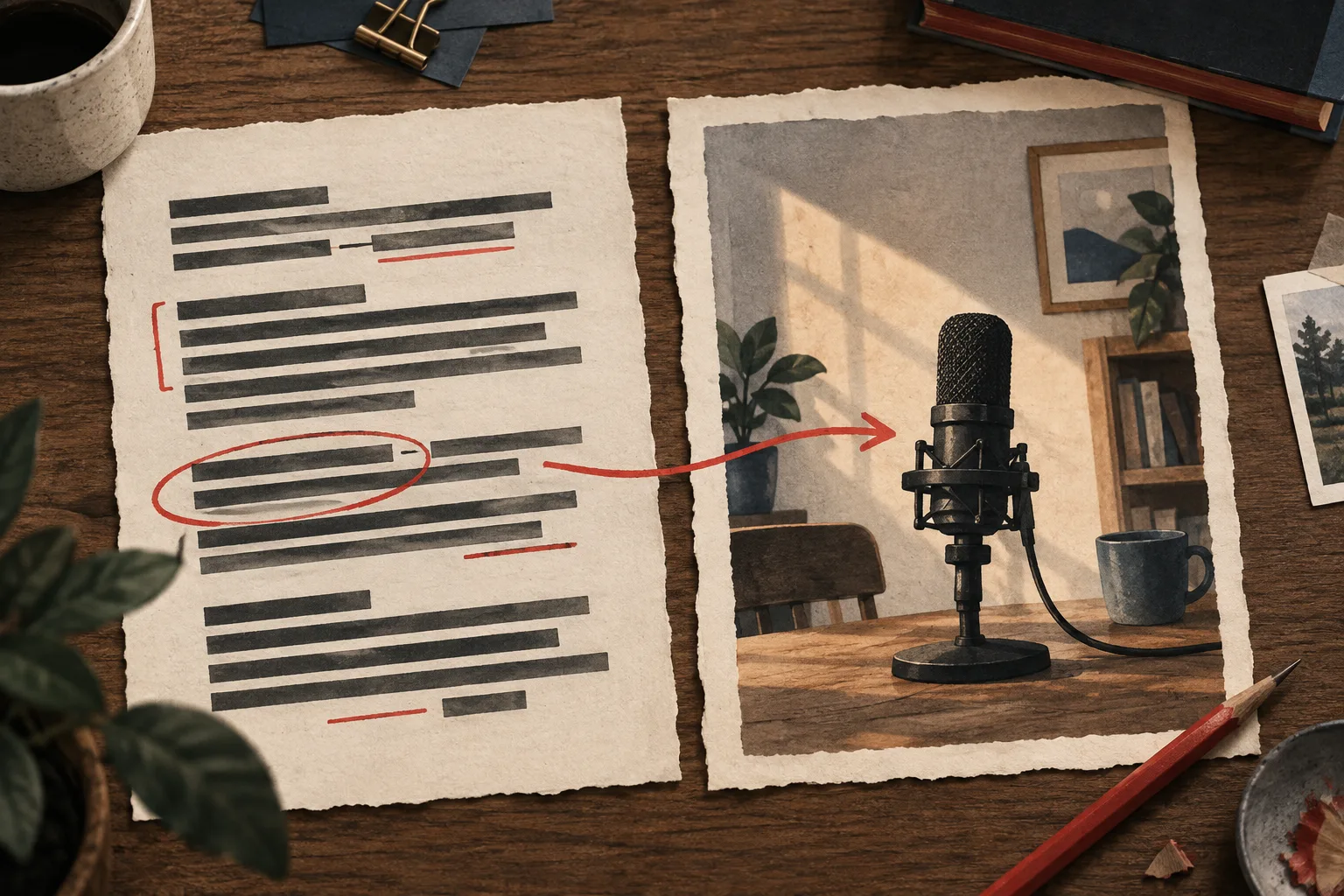
Write the promise before researching
A topic is not yet an idea. “Home office lighting” names a category. “Make a windowless office look natural on video calls” names a problem and an outcome. The second version tells you which examples to study and what footage you need.
Write one sentence beginning with “After watching, the viewer can…” If you cannot finish it without vague words such as better or amazing, narrow the task. An entertainment video can use a different sentence: “The viewer wants to see whether…” The principle is the same: identify the payoff.
Gather evidence that can disagree with you
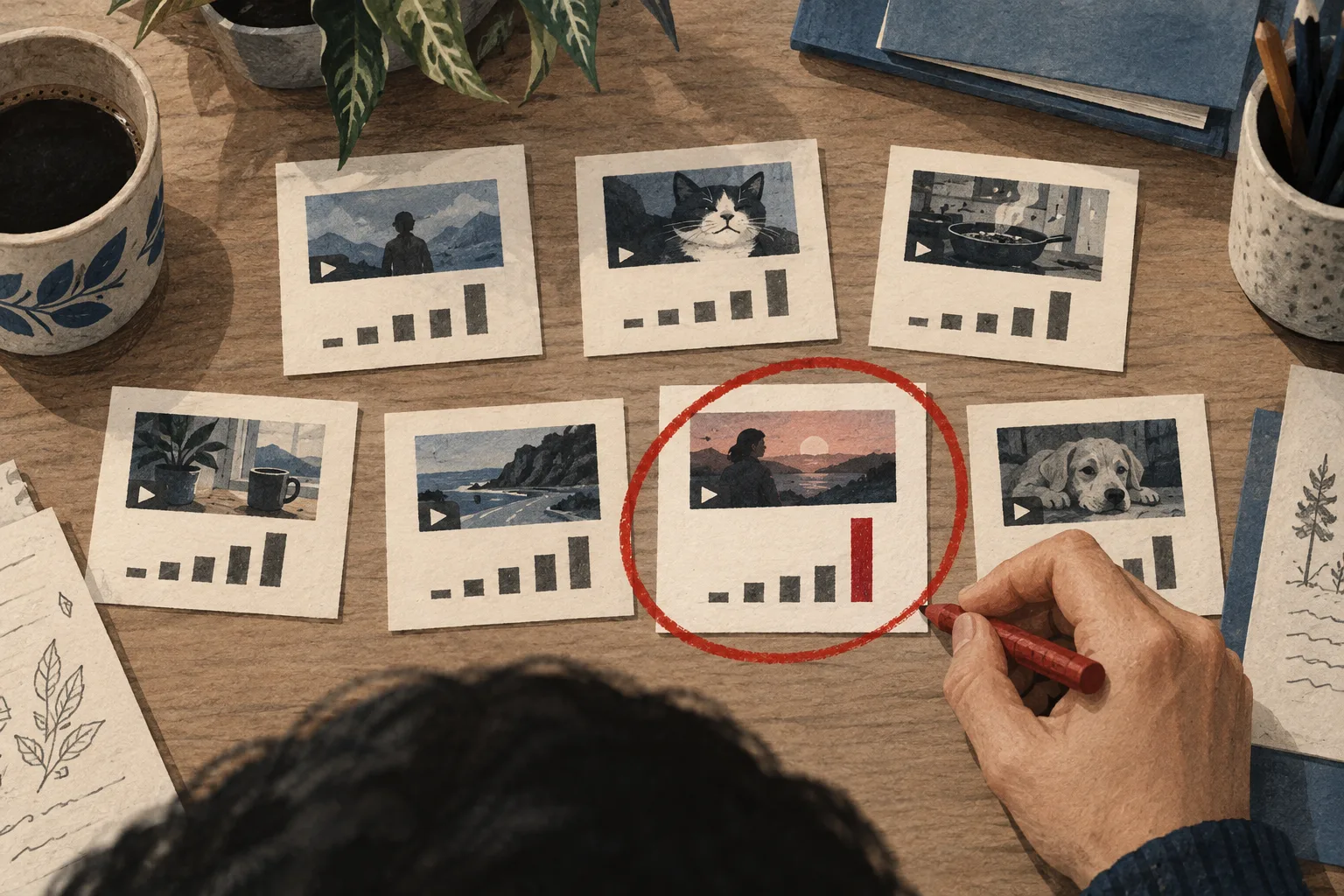
Find several relevant videos across different channels. Note their relative performance, age, format, and audience. Read specific questions in comments, search related phrasing, and look for unsuccessful versions of the premise.
Do not use a high score as permission to stop thinking. A breakout tied to a product launch may not support an evergreen tutorial. A famous guest may explain attention more than the subject. Write the strongest alternative explanation next to your preferred one.
Build a four-part decision sheet
| Test | Green signal | Reason to pause |
|---|---|---|
| Need | Specific viewer problem appears repeatedly | You only have a broad trend label |
| Promise | A stranger understands the payoff | The title needs a paragraph of explanation |
| Proof | You can show the result honestly | The claim depends on evidence you lack |
| Feasibility | Production fits your time and access | The premise requires resources you cannot obtain |
Avoid averaging away a fatal weakness. Strong demand cannot compensate for a claim you cannot substantiate. A low-cost experiment may be worthwhile with uncertain demand, but label it as exploration rather than pretending all four tests passed.
Run a cheap preproduction test
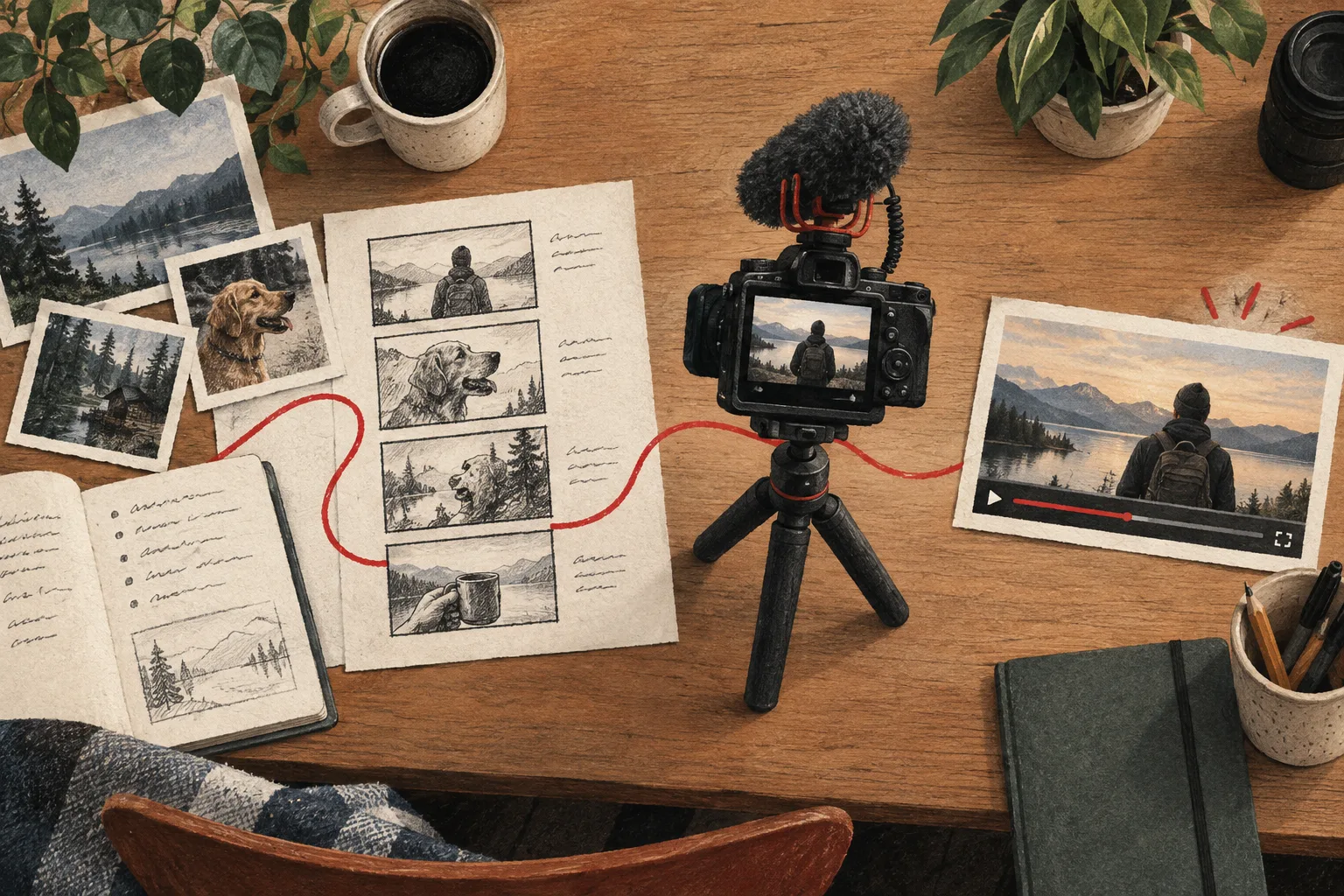
For the windowless-office example, shoot a short before-and-after clip before writing the full script. Does the result look meaningfully different? Can a viewer see the change on a phone? Does it still work without professional color correction?
Sketch two title-thumbnail pairs. One might emphasize the room's constraint; the other might emphasize the visible transformation. Show them to someone who resembles the target viewer and ask what they expect to receive. Do not ask which one they like better before confirming they understand the same promise.
This is qualitative feedback, not a statistically valid forecast of CTR. Its value is catching confusion while changes are cheap.
Define the smallest useful version
You may not need a ten-product comparison. A three-light demonstration with consistent settings could answer the question more clearly. Reduce scope until the central promise can be delivered well.
Set a stop rule: if the setup cannot produce the claimed improvement in the test footage, change the promise or drop the idea. Having a stop rule protects you from finishing a weak concept merely because you already spent two evenings on it.
Keep the evidence with the brief
Save the references in Vidfora and develop the script from a written decision: audience, problem, promise, proof, constraints, and open questions. The Coach can help challenge the brief, but verify its suggestions against your evidence.
After publication, compare the actual response with the assumption you tested. A useful validation process becomes more informed over time because you retain both the reasoning and the outcome.
Common questions
Can a video idea be fully validated before publishing?
No. Research and preproduction tests reduce uncertainty, but the actual audience response remains unknown. Treat validation as a decision process rather than a guarantee.
Should I reject an idea with no obvious competitors?
Not automatically. It may be original or simply lack demand. Test the viewer problem through adjacent examples, direct conversations, or a smaller production before making an expensive commitment.
Published by Vidfora, the product discussed in these guides. Examples are illustrative unless a source is named. Editorial approach · Suggest a correction