Write the first 30 seconds of a YouTube video with less friction
Confirm the title's promise, show relevant proof, and establish the next question without a long generic introduction.
The quick answer
The opening should quickly confirm that viewers chose the right video, show why the promised result matters, and begin the useful work. The exact timing depends on the subject, but unnecessary greetings, repeated promises, and unrelated setup can delay the payoff.
In this guide
Begin with the expectation you created
Place the title and thumbnail beside the opening draft. What does a viewer expect to see first? A comparison title creates a different expectation from a personal story or a troubleshooting guide.
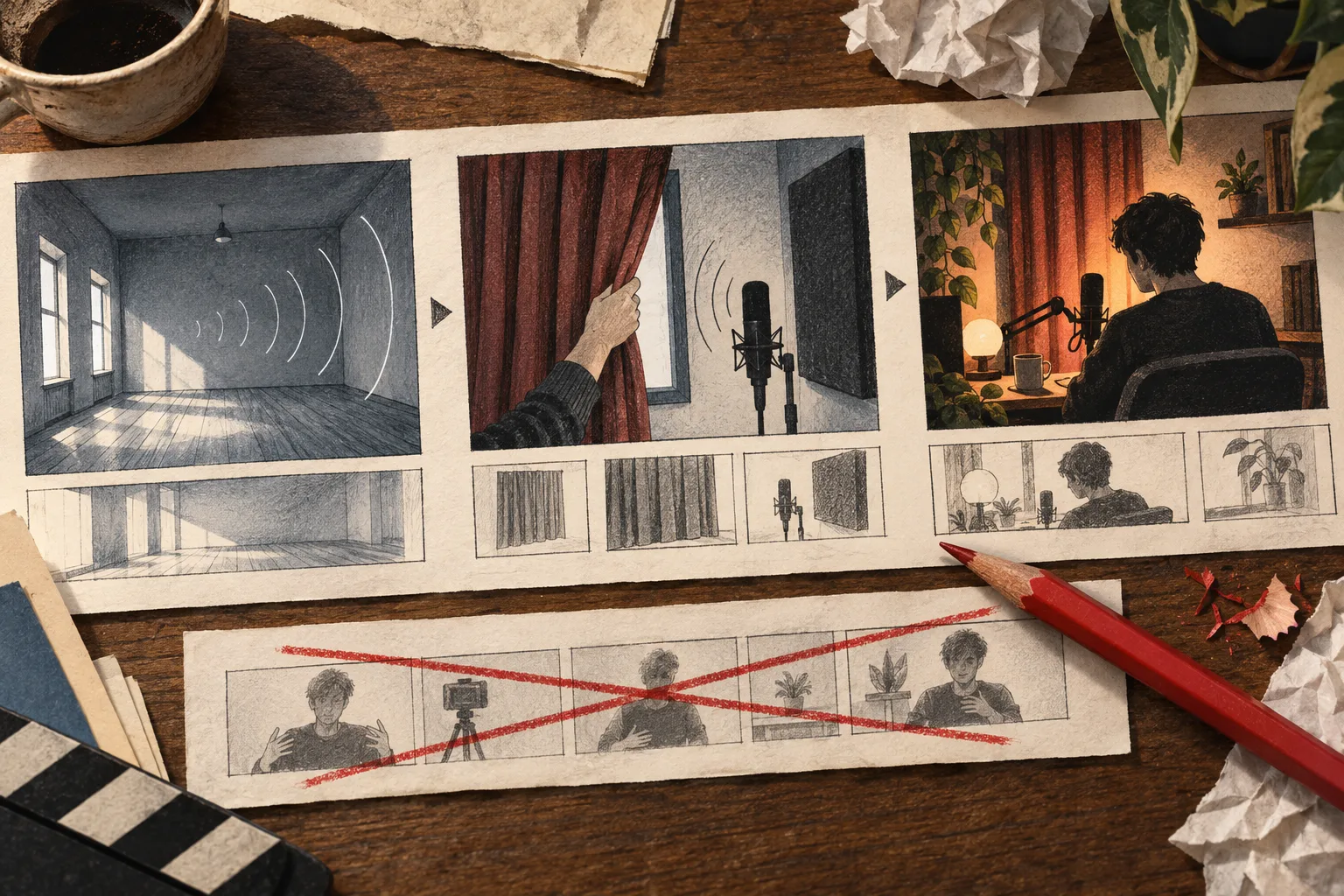
For a video promising to fix echo in a small room, a matched audio sample is a direct way to establish relevance. A long explanation of your channel's mission is less useful at that moment, even if it belongs elsewhere.
Use three opening jobs
Recognition: show the problem or question in a form the viewer understands.
Credibility: provide an early reason to trust that the video can answer it, such as a visible test setup or a clear demonstration.
Direction: explain what the viewer will learn or what uncertainty the video will resolve next.
These jobs do not require three separate speeches. One concise sequence can accomplish all of them.
Work through an opening revision
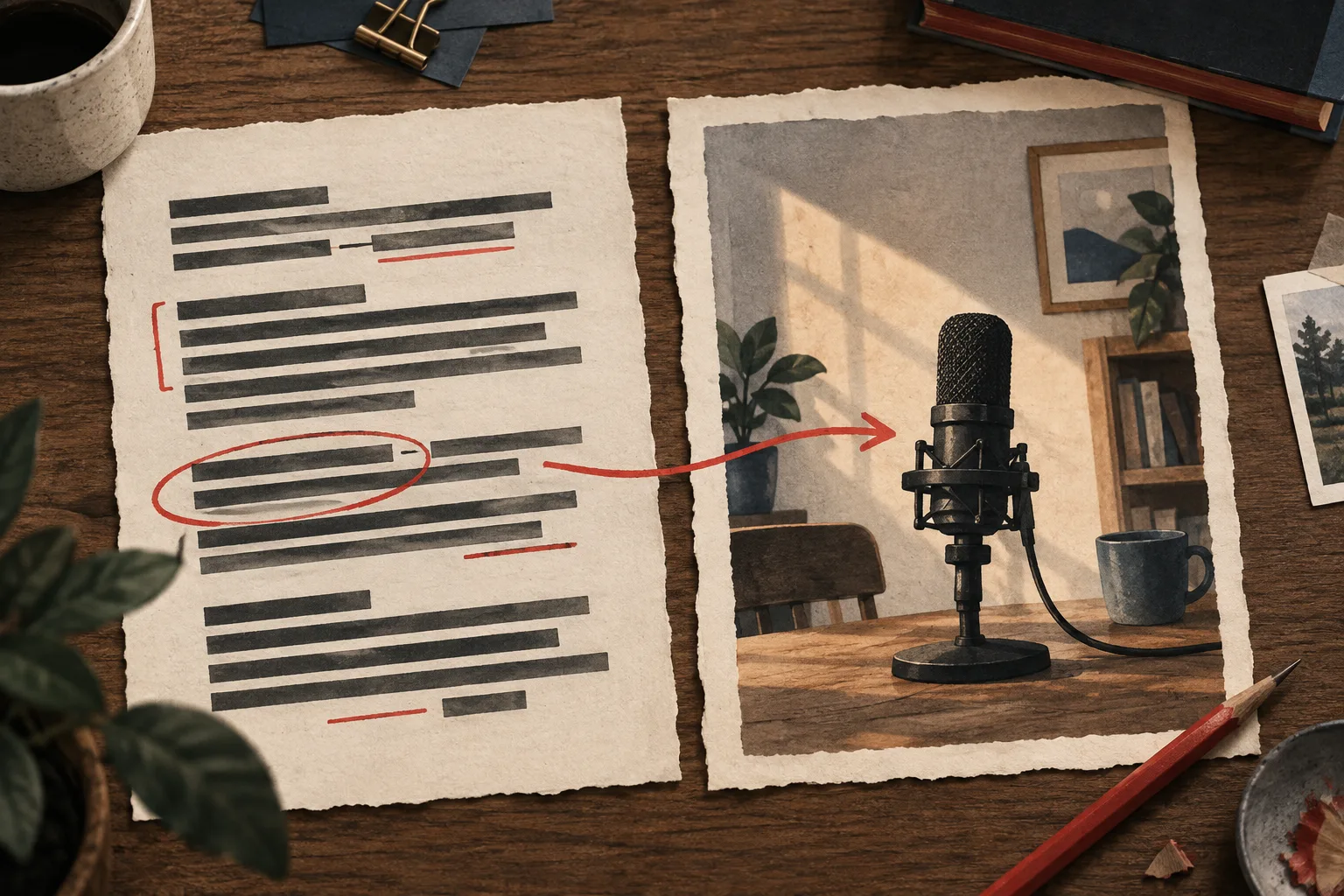
A weak draft might say: “Today we're going to talk about something really important, which is audio quality. As you know, audio is one of the most important parts of making videos.”
A stronger version could begin with the two recordings, then say: “Same microphone, same settings, different room setup. I'll show the three changes I tested and which one made the most useful difference here.”
The revised opening identifies the comparison, establishes the test conditions, and creates a relevant next question. It does not need to claim that the method will work identically in every room.
Remove repeated promises
Some openings announce the outcome three times before doing anything. Once the viewer understands the promise, move into the evidence. Repetition can feel like preparation while functioning as delay.
Cut phrases that describe the video instead of helping the viewer experience it. Replace “we will be looking at a demonstration” with the demonstration itself when possible.
Keep necessary context
Speed is not the only goal. A test without conditions can mislead, and a tutorial without requirements can confuse. Include the context that changes how the viewer should interpret the result.
The editing question is not “Can I remove every second?” It is “Does this second help the viewer understand or care about the promised work?” A brief pause to hear an audio comparison may be essential.
Review with actual retention data
After publication, inspect your own opening performance in context. YouTube's audience retention documentation explains the intro measure and key moments. A drop suggests an area to investigate, but the graph alone does not explain the cause.
Rewatch the opening alongside the packaging. Consider a mismatch, unclear audio, delayed value, or the wrong audience expectation before prescribing faster cuts.
Ask for targeted script feedback
In Vidfora's Coach, provide the title, thumbnail description, and opening. Ask which expectation is established, where proof appears, and what can be removed without losing necessary context.
Use the critique as an editing aid and retain your judgment. The best opening is the one that begins the right experience for this viewer, not the one that most closely resembles a generic “viral hook” template.
Common questions
Should I reveal the result immediately?
Often a useful glimpse of the result establishes trust, but the right choice depends on the experience. A tutorial benefits from clarity; a story may preserve a meaningful uncertainty while still making the stakes understandable.
Is every retention drop caused by a weak hook?
No. Audience mismatch, traffic source, technical issues, and the subject itself can affect early behavior. Inspect the actual opening and context before deciding what to change.
Published by Vidfora, the product discussed in these guides. Examples are illustrative unless a source is named. Editorial approach · Suggest a correction