A YouTube video research checklist for your next upload
Use a focused research session to choose a viewer, inspect evidence, challenge assumptions, and leave with a production-ready brief.
The quick answer
A complete video research session should identify the viewer, inspect relevant examples, separate facts from interpretations, define an original contribution, and produce a brief. Stop collecting when you have enough evidence to make the next production decision.
In this guide
Set a decision and a time limit
Before opening search, write the decision you need to make. “Choose between a beginner setup tutorial and a troubleshooting video” is a decision. “Find inspiration” is an activity with no obvious finish line.
Set a research time budget that fits the risk. A quick talking-head explanation may need a focused session. An expensive documentary needs substantially more verification. The checklist below describes the work, not a promise that every topic can be researched in a fixed number of minutes.
Check the audience and promise
Write down the viewer's experience level, situation, and problem. Then draft a title that describes a concrete payoff. If the title could fit hundreds of unrelated videos, the promise probably needs work.
Ask whether the viewer would recognize the problem without your explanation. A technically accurate topic can still be packaged in language only specialists understand. Record both the technical term and the ordinary phrasing your audience uses.
Inspect the evidence
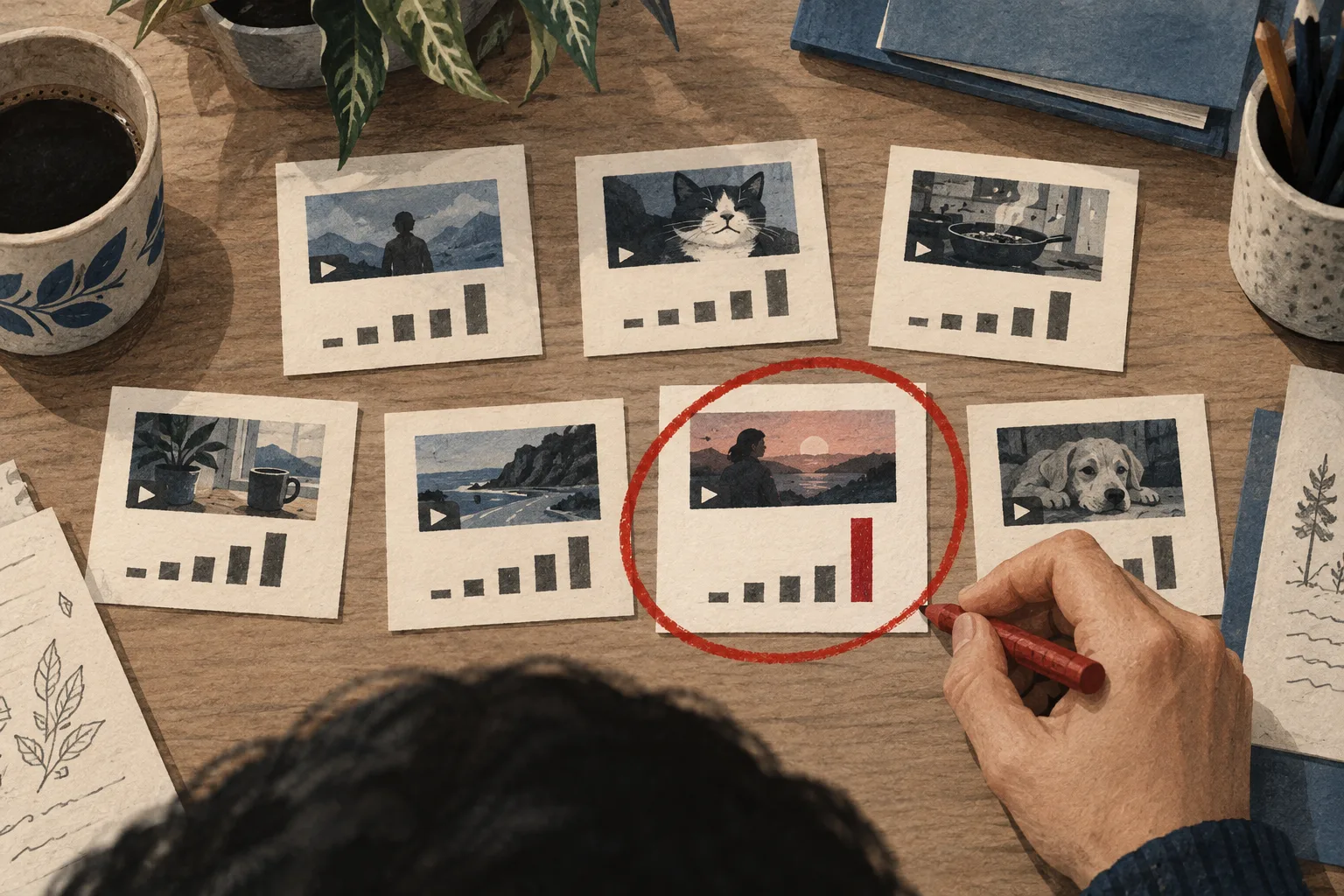
Find examples across more than one channel and compare their context. Include strong and ordinary results. Keep separate notes for observable facts and your explanations.
Your research record should answer:
- Which videos address the same viewer problem?
- How unusual is each result for its channel?
- Are the formats and upload ages reasonably comparable?
- What does the title promise and the thumbnail show?
- Does the opening deliver that promise quickly?
- Which questions remain unanswered?
- What alternative explanation could account for the result?
If a claim relies on platform behavior, product specifications, or rules, verify it with a current primary source. Another creator's confident statement is not enough.
Check your ability to prove the promise
List the footage, demonstrations, access, and expertise required. Identify the hardest assumption and test it early. For a repair video, that may mean confirming that the proposed fix actually works before drafting a triumphant title.
Label numerical examples as hypothetical unless they come from documented observations. Keep source links beside factual claims. This makes later script review faster and helps prevent an AI draft from turning an assumption into a fact.
Make the original contribution explicit
Write a sentence completing “Our video adds…” Possible answers include a new test, a clearer explanation for a specific audience, an updated walkthrough, or a comparison under a neglected constraint.
If the answer is only “different words,” return to the brief. Research should help you find a useful contribution, not merely a successful surface to imitate.
Finish with a production handoff
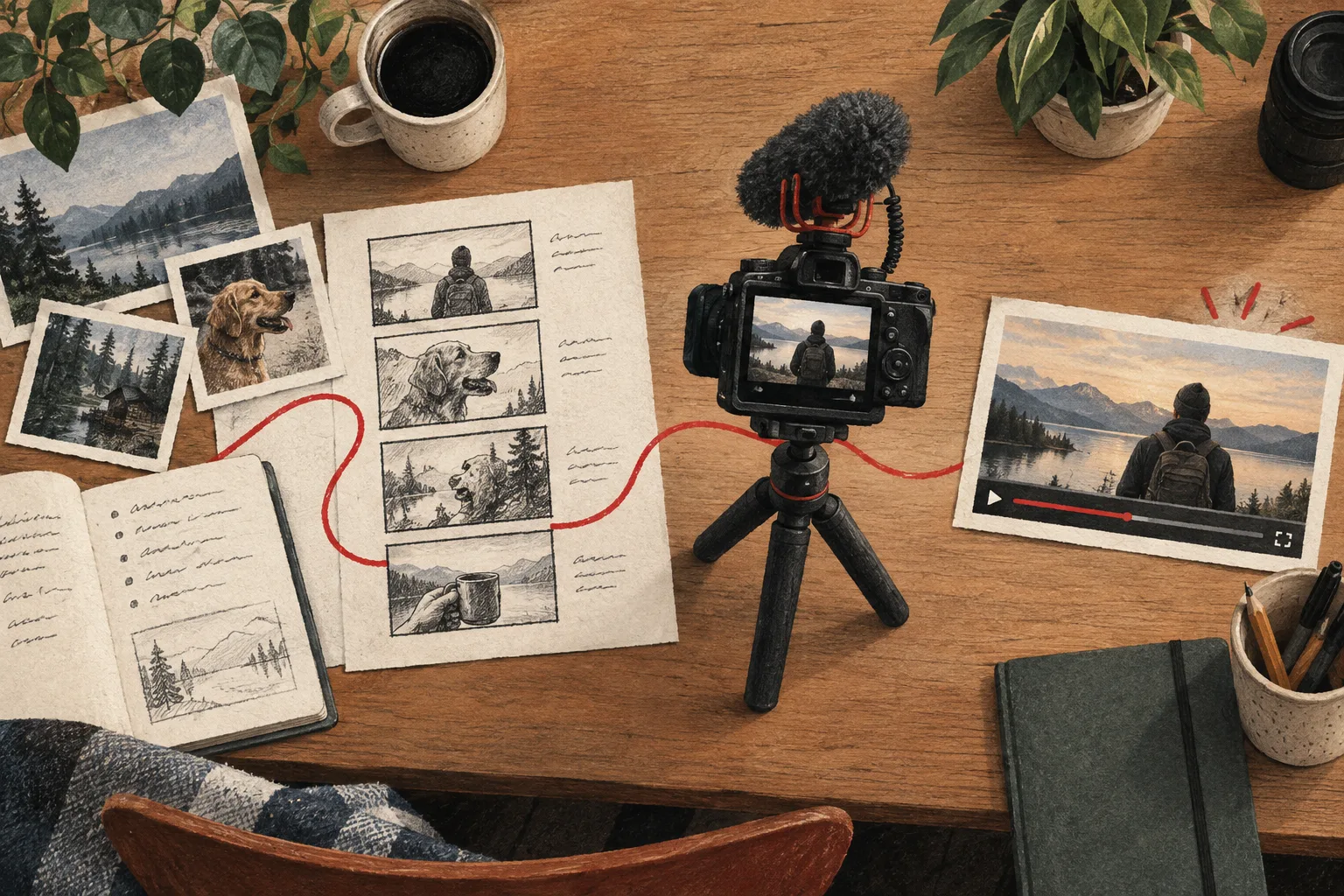
Create a short brief containing the viewer, promise, proof, outline, packaging direction, and unresolved questions. Link only the references that explain an actual decision. Store the remaining examples in an exploration board.
In Vidfora, outlier research, boards, and the creation workflow can support this handoff. The important habit is preserving why you chose the idea, not just where you found it.
Before closing the session, choose one next action: film the proof, sketch the thumbnail, write the opening, or reject the idea. A research session is complete when it changes the work you will do next.
Common questions
How long should I spend researching a YouTube video?
Match the effort to the uncertainty and production cost. Use a clear stop condition, such as having enough evidence to choose a premise and verify its main claim, rather than browsing until you feel inspired.
What is the most common research mistake?
Collecting successful examples without explaining why they matter. A saved reference should support a specific decision about the viewer, promise, proof, or execution.
Published by Vidfora, the product discussed in these guides. Examples are illustrative unless a source is named. Editorial approach · Suggest a correction