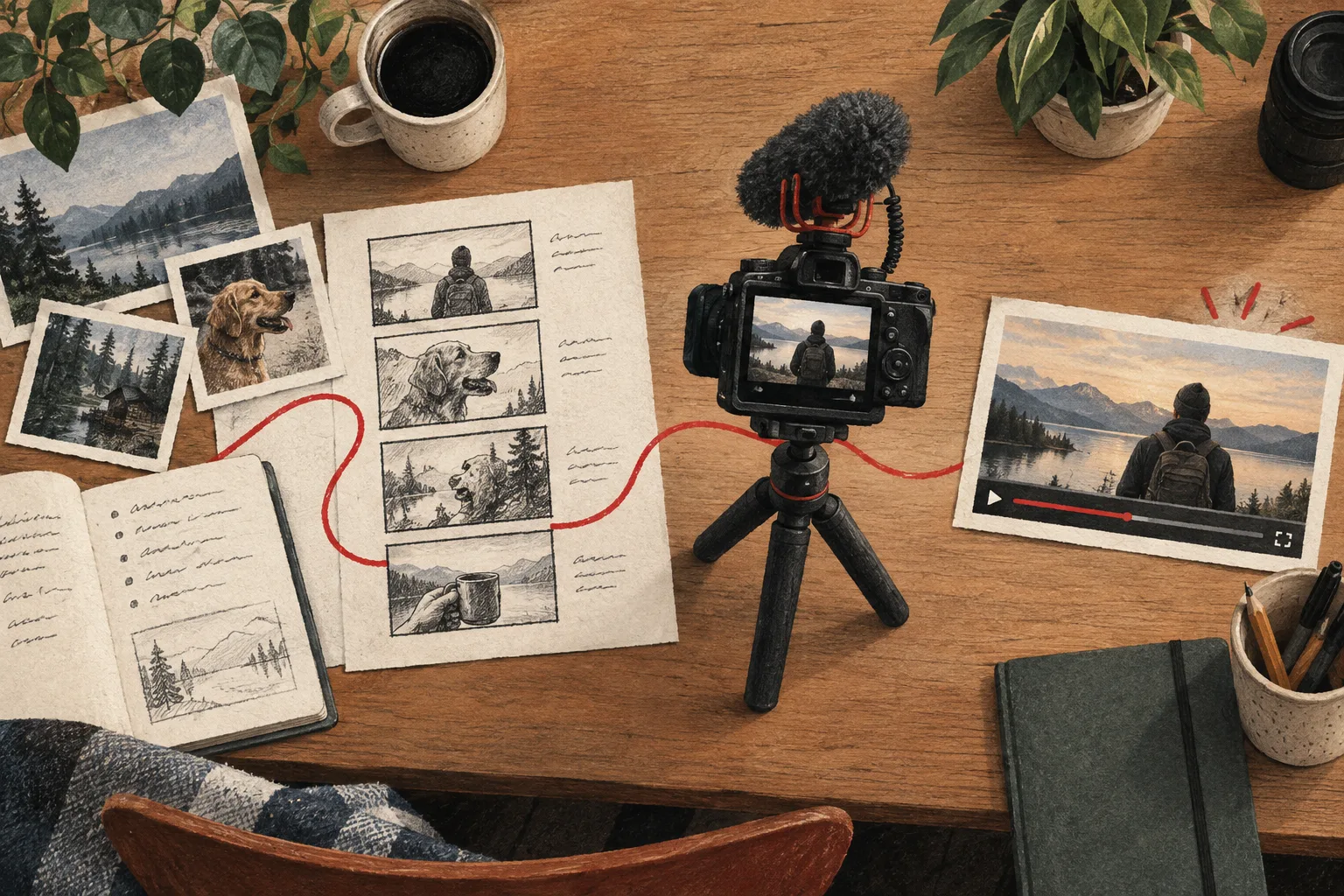
Build a YouTube research board you will actually use
Organize video references by the decision they support, with a practical board structure and a weekly cleanup routine.
The quick answer
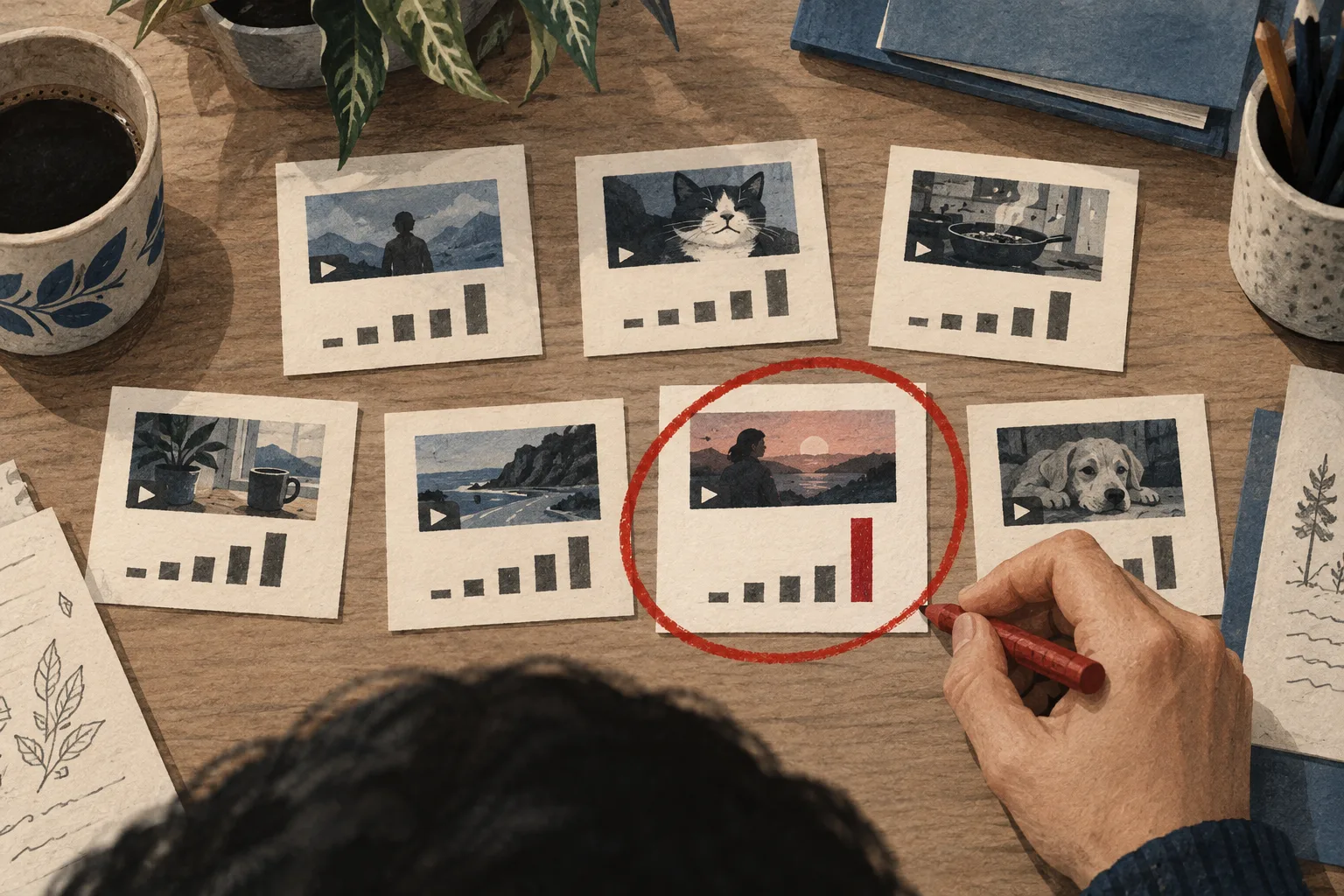
A useful research board groups references around a specific viewer problem or production decision. Save fewer examples, record what each teaches you, and move a selected idea into a brief. A board should help you choose, not become an endless archive.
In this guide
Name the board after the work
“Inspiration” is a reasonable starting folder and a poor long-term research system. It does not tell you why a video belongs there or when to return to it. Use names such as “Small-room lighting: next video,” “Beginner openings to study,” or “Desk makeover visual contrasts.”
Separate active production from broad exploration. An active board supports a decision you expect to make soon. An exploration board collects possibilities without pretending they are scheduled work. This distinction makes it easier to stop researching when you already have enough evidence.
Give each saved reference a job
For every reference, write a short note in your accompanying project brief. Choose one purpose: audience evidence, title mechanism, visual composition, opening structure, demonstration, or an objection worth answering.
A note such as “good video” expires almost immediately. A note such as “shows the disappointing result before explaining the fix” tells your future self what to inspect. Keep the timestamp if the useful part occurs deep in the video.
Vidfora's Saved Boards organize the videos. Keep the interpretive notes in your script or project document if that is where you make decisions; do not assume a saved thumbnail preserves your reasoning.
Use a compact evidence set
A working board for a microphone comparison might contain:
- Two relevant outliers that demonstrate audience interest.
- One ordinary upload on the same problem to challenge your explanation.
- Two packaging references with clearly different promises.
- One strong opening that introduces the test conditions quickly.
- One question from a viewer that the existing examples do not answer.
These are suggested roles, not mandatory quotas. The point is coverage. Twenty nearly identical thumbnails may provide less useful information than six references that answer different questions.
Review the board as a decision meeting
Open the board with one question: “What can I now decide?” For example, the references may support a low-cost-versus-premium framing but reveal that viewers need an audio sample before hearing specifications.
Translate that into an action: open with matched recordings, explain the test environment, then reveal the products. If a reference does not support a decision, move it to exploration or remove it from the active shortlist.
Watch for contradictory evidence. One creator's successful technical deep dive may conflict with another creator's successful beginner overview. The contradiction may disappear when you notice that they serve different viewers. Organize by audience instead of forcing the examples into one formula.
Keep sharing focused
When working with an editor or designer, share only the relevant board and a short brief. Explain which elements are references and which must be original. “Use this lighting contrast, not this person's exact composition or expression” is a clearer instruction than “make it like this.”
A public share link should contain only material you intend to share. Review the board before sending it, and keep private project notes in your own workspace. Shared research is most useful when the recipient understands the decision it supports.
Close the loop after publishing
After the video ships, record which reference actually influenced the result and what you learned. Archive the board with the project, or rename it so it no longer looks like current work. Keep a small evergreen collection of techniques you repeatedly use.
The payoff is cumulative: the next research session begins with organized evidence and remembered lessons instead of another blank browser window.
Common questions
How many videos should a research board contain?
There is no ideal count. Keep enough to cover the decisions you need to make, and remove duplicates that add no new information. A small active shortlist is usually easier to act on than a large undifferentiated collection.
Should boards be organized by niche or by project?
Use project boards for immediate decisions and broader niche boards for exploration. Move selected references into the project context when an idea becomes real work.
Published by Vidfora, the product discussed in these guides. Examples are illustrative unless a source is named. Editorial approach · Suggest a correction