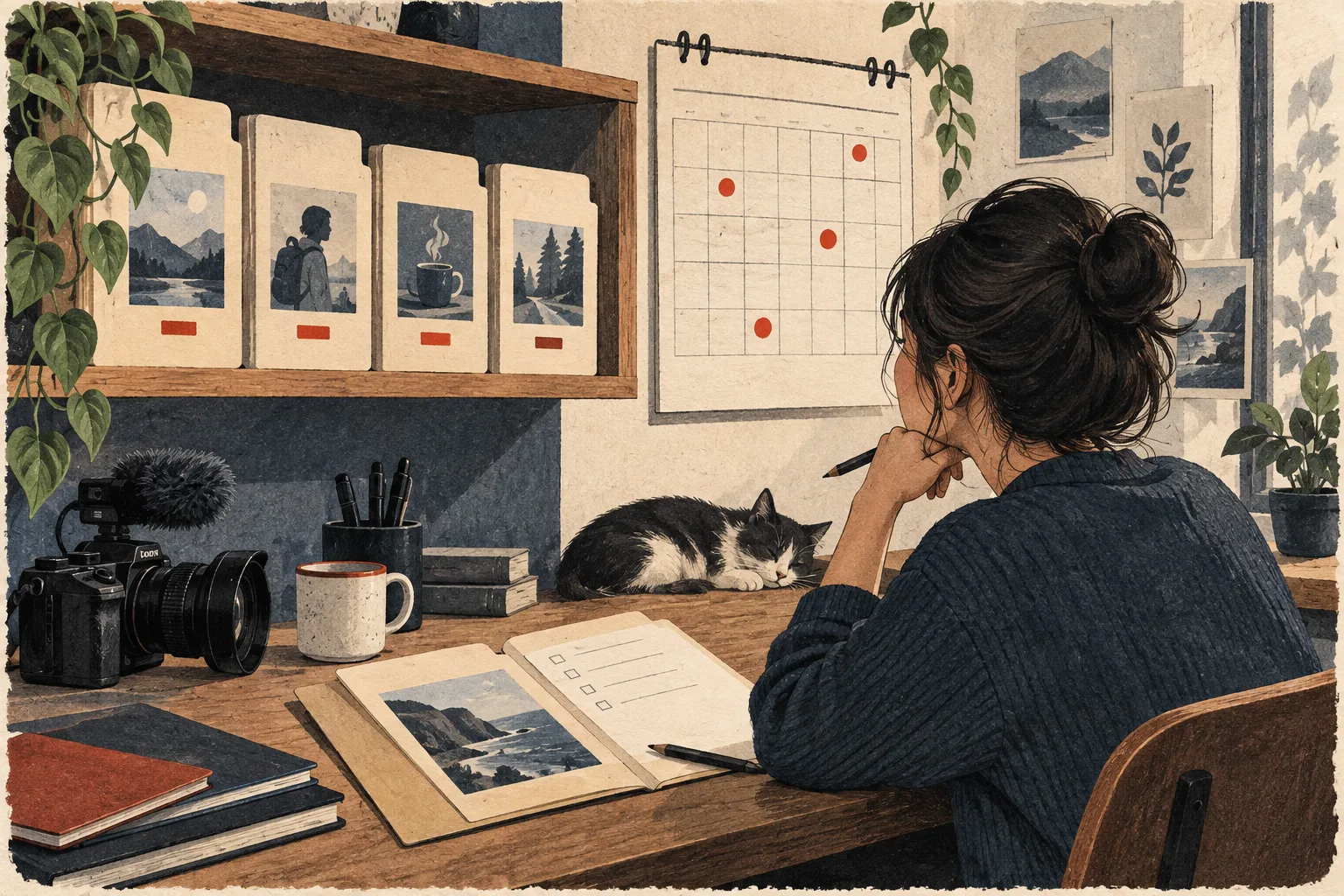
Plan YouTube videos as a solo creator without creating a second job in admin
Use a small active queue, reusable briefs, and realistic production limits to keep research and planning from consuming the time meant for making videos.
The quick answer
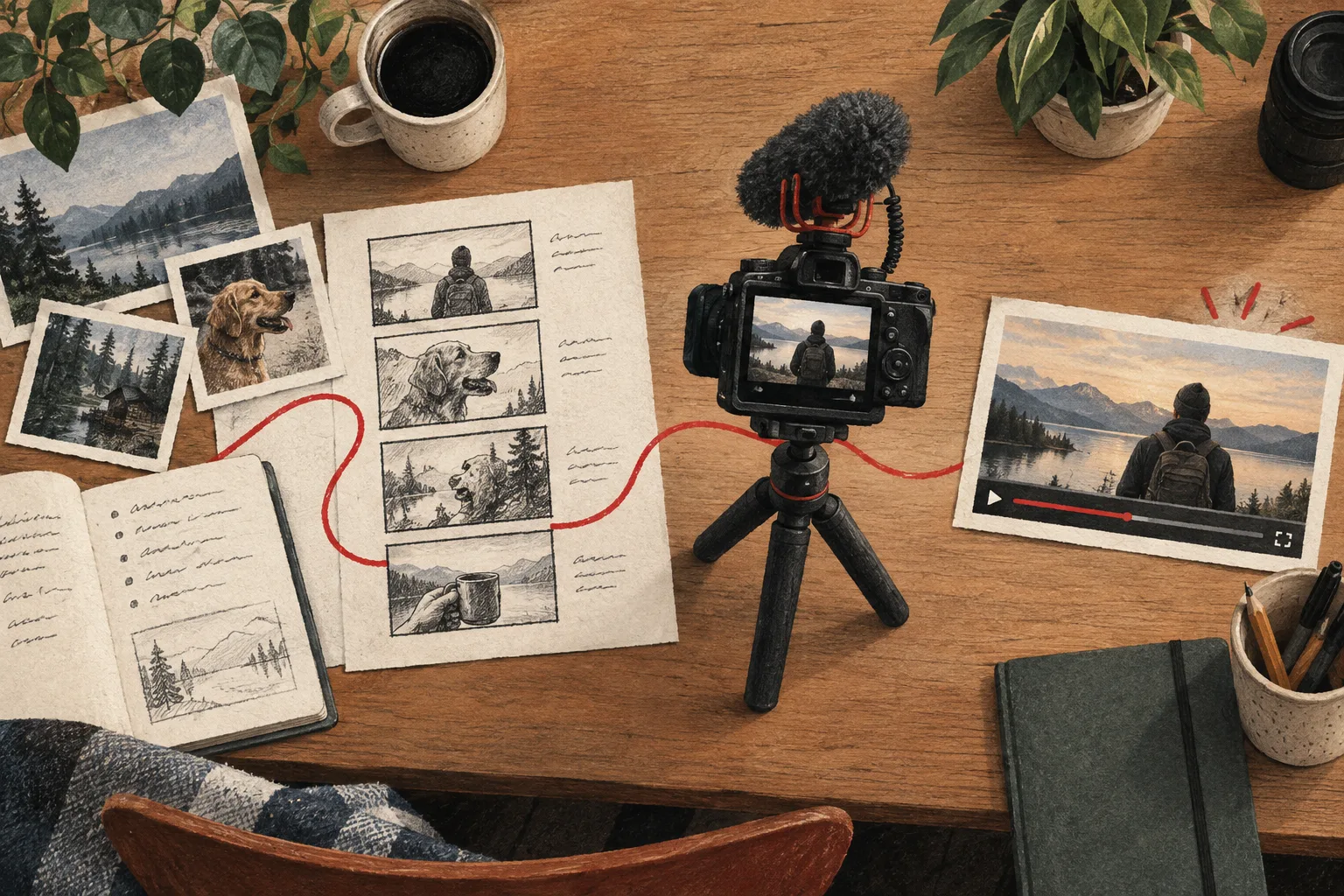
Solo creators benefit from a small number of active projects, clear next actions, and reusable decision templates. Plan around actual available time, limit research to the questions that matter, and preserve context so every session does not begin with rebuilding the project.
In this guide
Count the time you actually have
List the hours available after your other responsibilities and include setup and recovery time. A theoretical free evening may not support the same work as a quiet uninterrupted morning.
Match tasks to the conditions. A short session may suit reviewing title options; a longer block may be necessary for filming. Planning every task as if it requires the same kind of attention creates avoidable frustration.
Limit active work
Keep a small set of projects moving and a separate backlog of possibilities. Starting another idea can feel productive while delaying the one closest to completion.
For each active project, write one next action that can be completed in a realistic session. “Research” is broad. “Compare three relevant openings and choose the proof sequence” is bounded and reviewable.
Use a reusable brief
Create a short template with the viewer, promise, evidence, original contribution, required footage, packaging direction, and unresolved questions. Reuse the structure while making the substance specific to each video.
The brief prevents you from deciding the audience again during writing, the promise again during thumbnail design, and the conclusion again during editing. It is a memory aid for decisions you already made.
Put a limit on research
Define what you need to know before browsing. Stop when you can make the next decision or identify the specific missing evidence. An open-ended search for inspiration can consume the entire production window.
Use Saved Boards to preserve a shortlist and keep the interpretation in your project brief. More saved videos do not necessarily mean more progress.
Batch where the setup is shared
Batching can help when several tasks use the same equipment or environment. Photographing multiple thumbnail options while the filming setup is ready can save a later reconstruction.
Avoid batching so much that feedback arrives too late. Writing ten complete scripts before testing the first premise may create a large queue of work based on the same weak assumption.
Decide what good enough means
Define the essential quality conditions: accurate claims, clear audio, visible proof, a coherent explanation, and readable packaging. Then identify optional polish that can be reduced when necessary.
This does not mean publishing careless work. It means protecting the parts that matter most to the viewer instead of spending the final hour adjusting an insignificant decoration while a confusing explanation remains.
Review the process, not only the video
After publication, note where you lost time. Was the idea unclear? Did you forget a necessary shot? Did you repeatedly move references between tools? Choose one workflow improvement for the next project.
Vidfora's connected research, script, and packaging tools can reduce repeated handoffs when they fit your process. Evaluate the benefit by completing a real video brief, not by exploring every feature in one sitting.
A sustainable solo workflow leaves you able to finish useful work and learn from it. The planning system should make the next session easier to start, not become another elaborate project that needs maintenance.
Common questions
Should a solo creator use a detailed project-management system?
Only if the detail helps you make and finish videos. A clear brief, a small active queue, and specific next actions may be sufficient. Add structure when it solves an observed coordination problem.
How can I reduce research time without guessing?
Define the decision, collect a balanced relevant sample, and stop when the remaining uncertainty is clear. Use organized references so you do not repeat the same searches in every session.
Published by Vidfora, the product discussed in these guides. Examples are illustrative unless a source is named. Editorial approach · Suggest a correction