Research a YouTube Shorts niche without borrowing long-form assumptions
Evaluate Shorts ideas by immediate comprehension, repeatable visual payoffs, and production feasibility while keeping format comparisons separate.
The quick answer
Research Shorts within the Shorts format. Study how quickly viewers can understand the premise, what visual payoff the video delivers, and whether the idea can support distinct repeatable episodes. Do not assume a long-form outlier validates a short version.
In this guide
Define the viewing experience
A Short usually has less room to establish context than a long tutorial or documentary. Your research should therefore examine what a viewer can understand immediately: the object, problem, challenge, or transformation.
Choose a niche where you can repeatedly deliver a complete small payoff. A compact repair demonstration, a visual explanation, or a focused comparison can work as a research direction. The important word is complete. A clip that withholds the entire answer may frustrate viewers rather than create useful curiosity.
Compare like with like
Keep Shorts and long-form examples separate in your notes. They may address the same topic while serving different viewer intentions and distribution contexts. A detailed buying guide does not become a validated Short simply because you remove most of the explanation.
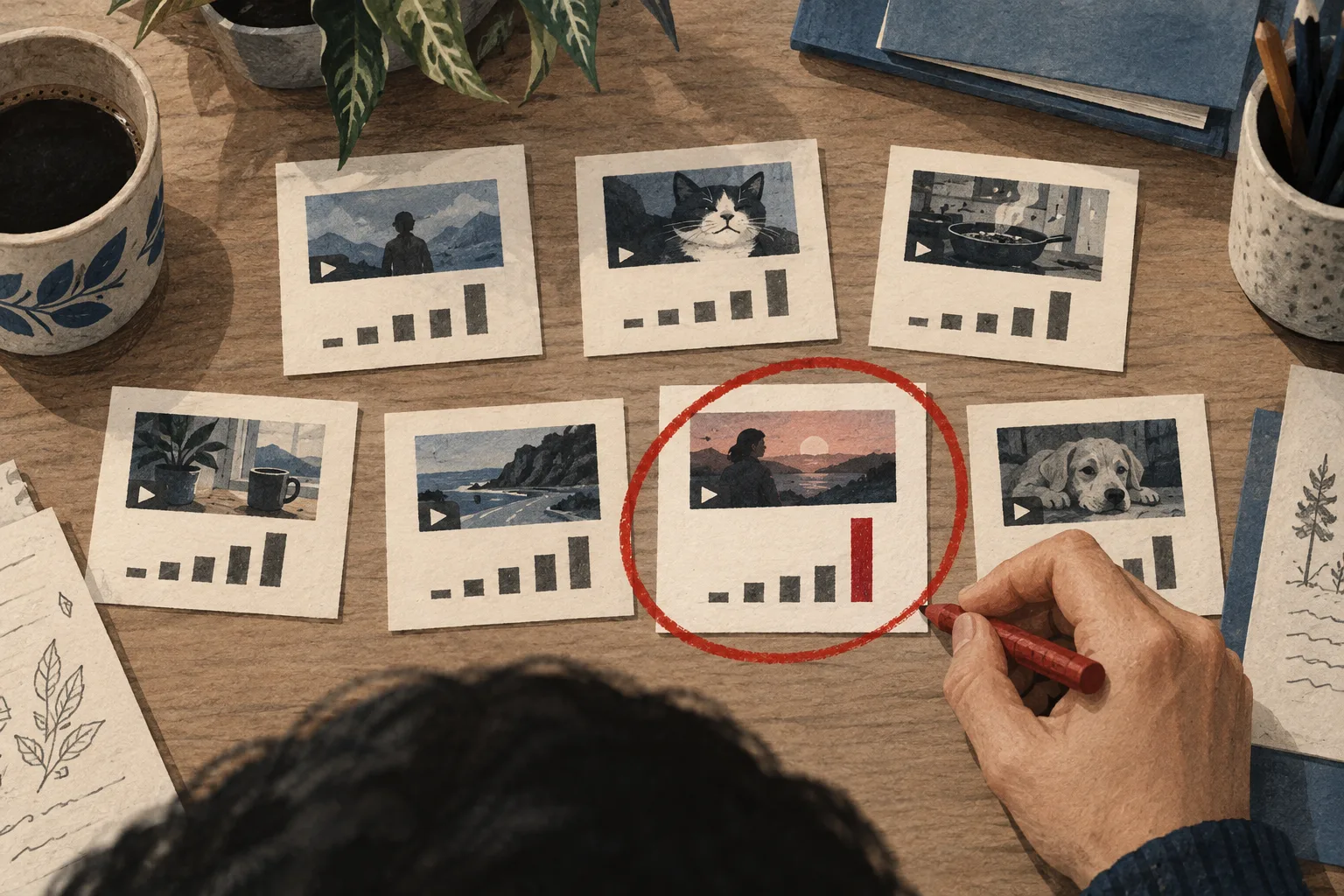
Vidfora separates formats in its outlier scoring. Use format filters when researching and inspect the actual execution. Relative performance can surface candidates, but it cannot tell you whether the premise remains clear when compressed.
Study the first visual decision
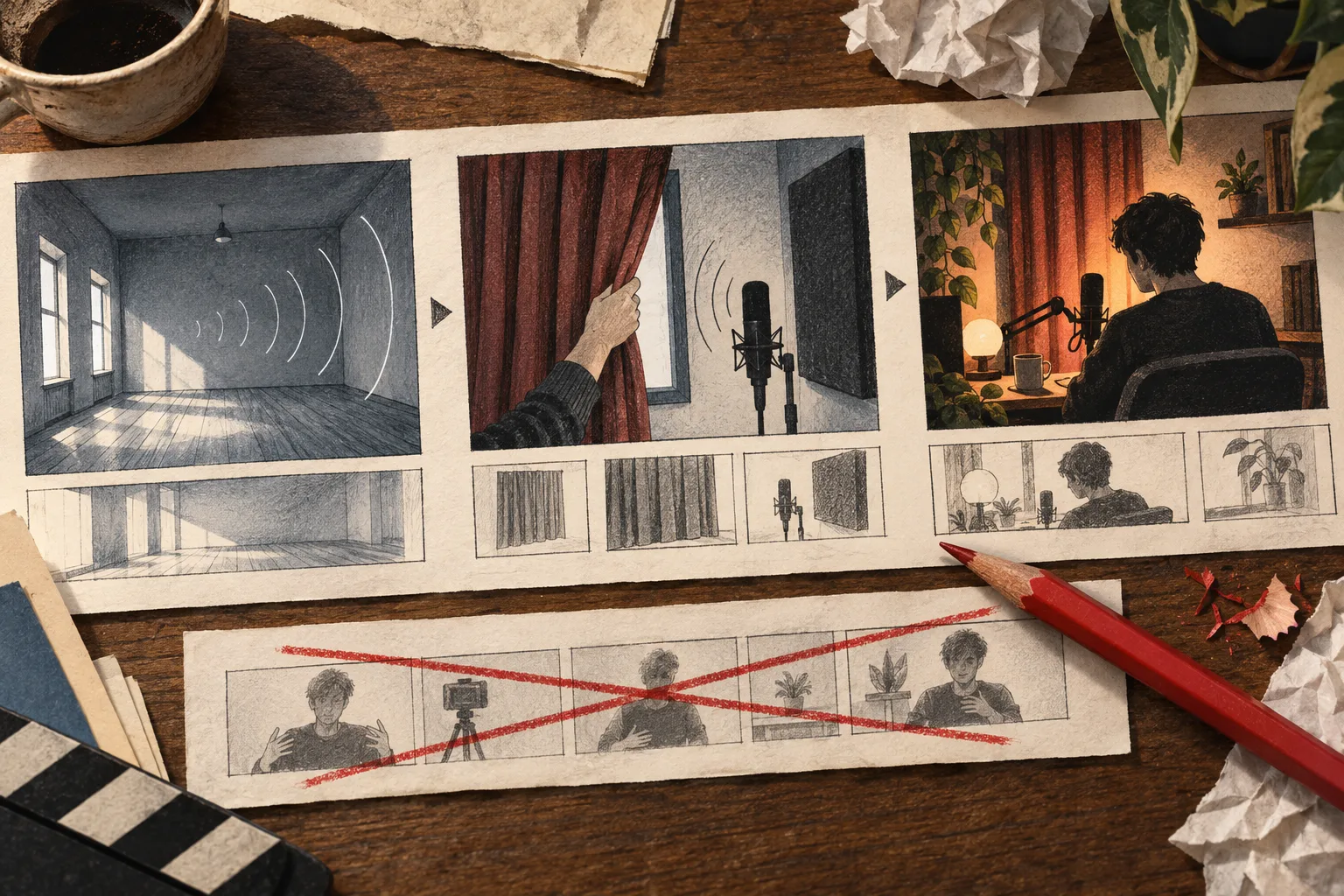
Pause a reference at the beginning and ask what is immediately understandable. Does the viewer see a problem, a surprising result, a familiar object in an unusual state, or an action already underway?
Then watch the payoff. Did the video answer the question it raised? Was text doing useful explanatory work, or compensating for a confusing image? Record the mechanism in a sentence rather than copying the exact opening.
Build a repeatability map
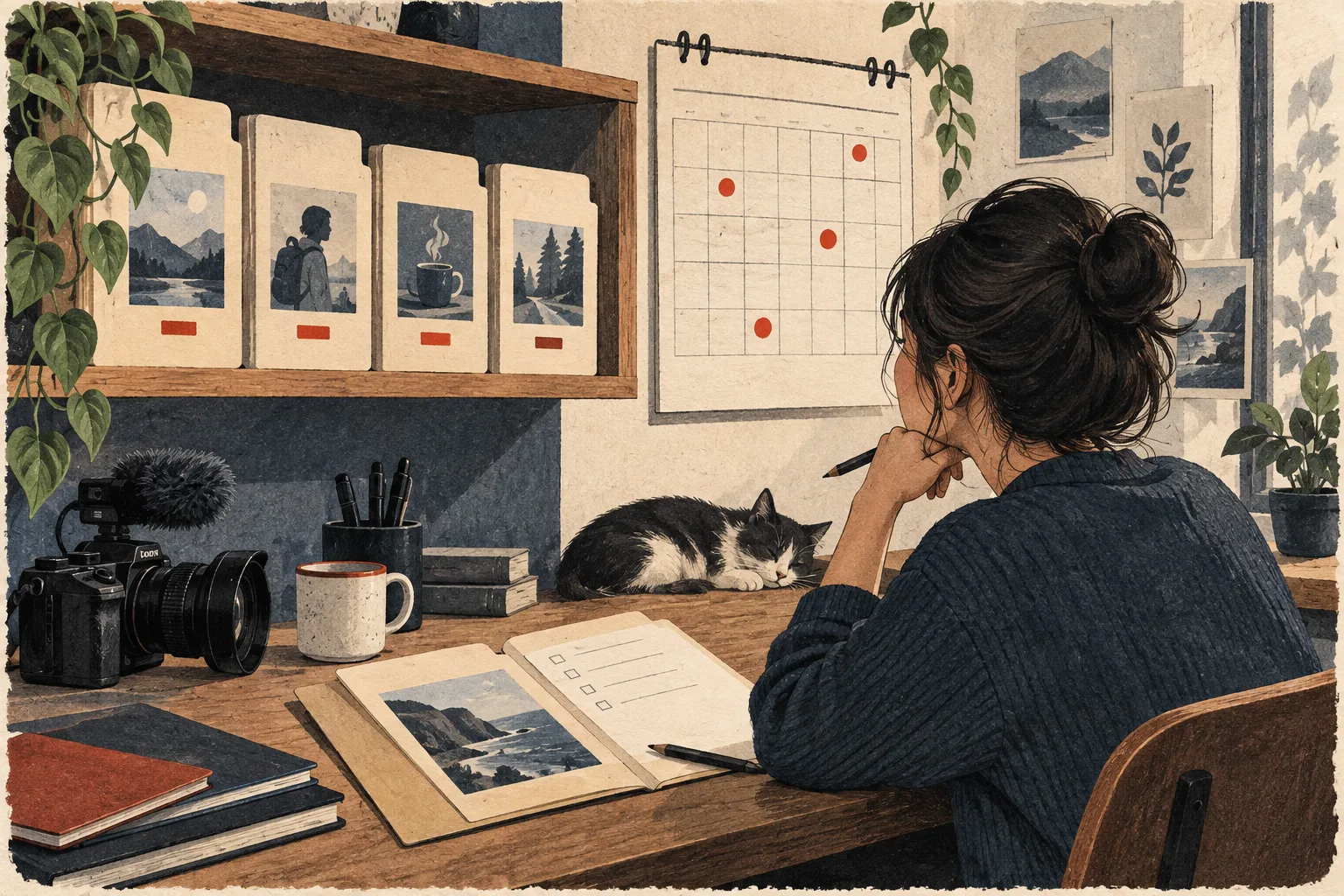
For a miniature restoration concept, distinct episodes might vary the material, damage, tool constraint, or test of the finished result. Each variation should create a new question, not merely a new object performing an identical loop.
Map the production requirements too. Small objects may still require specialized lighting, close-focus footage, and substantial preparation. A short runtime does not imply a short production process.
Test a coherent set of premises
Create several modest tests that share a viewer promise while varying a meaningful element. One might begin with the damage, another with the finished object's function, and another with a difficult repair step.
Keep a record of what changed and what you wanted to learn. Avoid changing topic, visual style, narration, and length simultaneously if you hope to interpret the result. You may still choose a broad exploration phase, but be honest that it answers a different question.
Use your own Shorts analytics for post-publication review. Check current metric definitions in YouTube Analytics documentation rather than assuming that every public view metric has the same meaning across formats.
Decide how Shorts fit the channel
Shorts can be the main product or part of a broader channel strategy. If you want them to support long-form videos, identify the audience connection explicitly. A popular unrelated Short does not establish interest in your detailed tutorials.
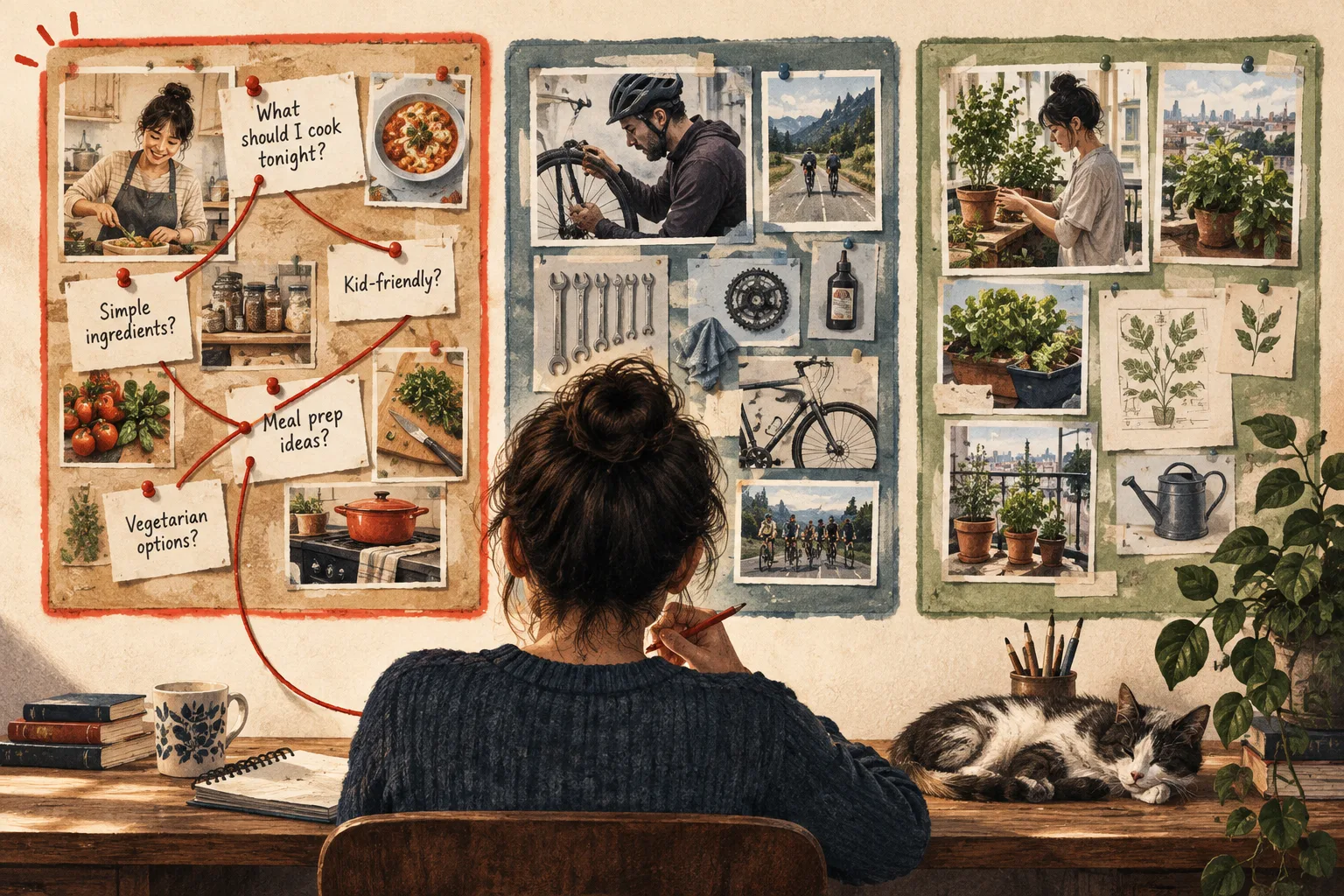
Keep separate research boards for format-specific execution and shared audience problems. This allows you to learn from both formats without treating their performance or creative requirements as interchangeable.
Common questions
Can I use long-form outliers to find Shorts ideas?
They can suggest viewer problems worth investigating, but validate the execution in Shorts separately. The premise must make sense and deliver value within the shorter format.
Should every Short direct viewers to a longer video?
Only when the longer video naturally extends the same need. The Short should still provide a useful experience on its own rather than functioning only as an incomplete advertisement.
Published by Vidfora, the product discussed in these guides. Examples are illustrative unless a source is named. Editorial approach · Suggest a correction