Plan a YouTube series around the viewer's next question
Create connected episodes with distinct payoffs so a series feels useful to new viewers and worth continuing for returning ones.

The quick answer
A useful series connects distinct videos through the same viewer journey. Each episode delivers a complete payoff and creates a relevant next question. Plan the relationship between episodes before relying on numbering or a shared visual template to make them feel connected.
In this guide
Define what continues across episodes
A series can follow a project, a recurring experiment, or stages of a problem. The connection should matter to the viewer. “Part one” and “part two” do not create a meaningful relationship by themselves.
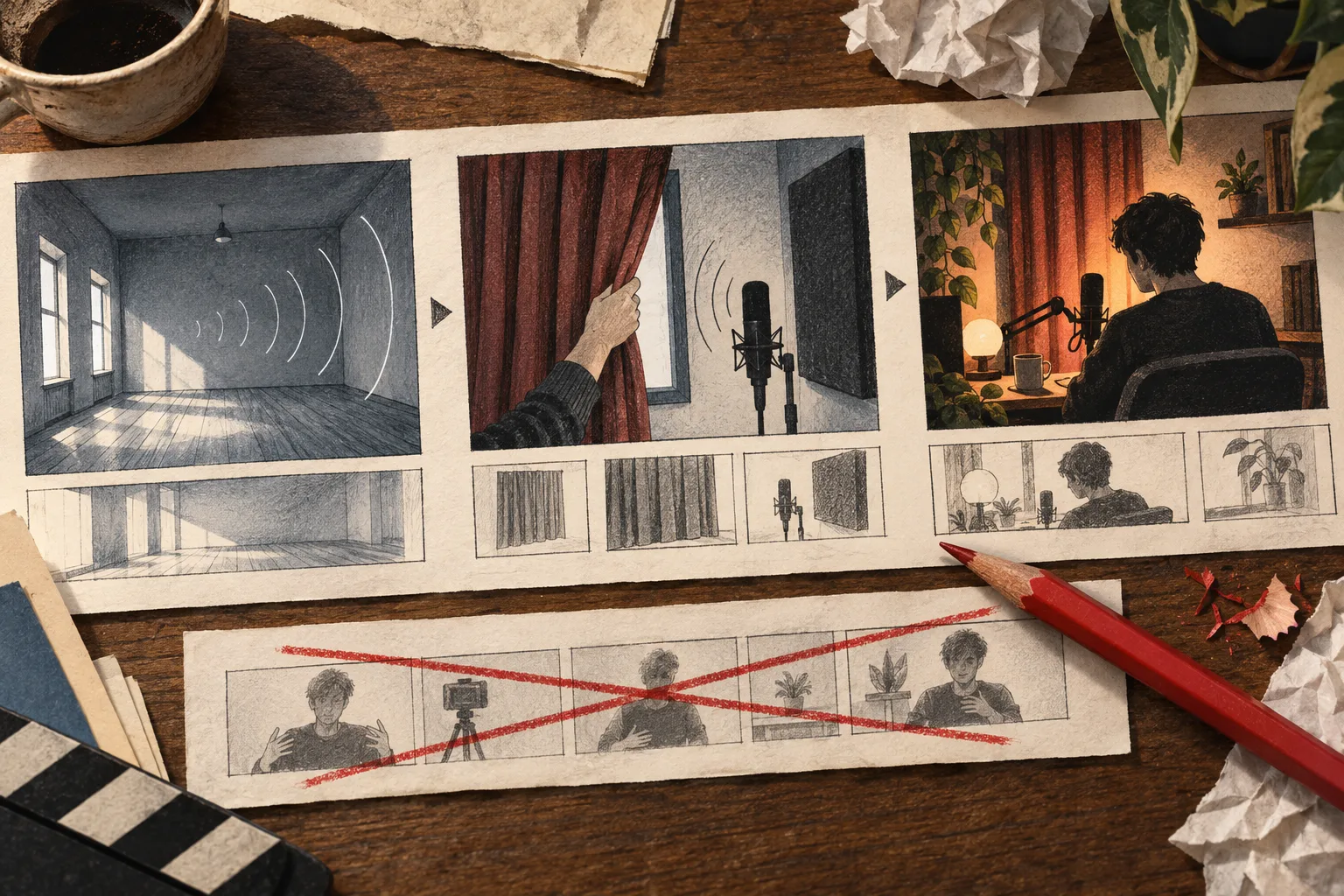
For a home-recording series, the continuing goal might be producing clear spoken audio in a small room. Episodes can address diagnosis, placement, room treatment, and workflow without repeating the same answer.
Give every episode a standalone promise
A new viewer should understand what they will gain without watching all previous installments. Provide brief necessary context and then deliver the specific answer.
Avoid titles that contain only a series name and episode number. If numbering is useful, keep the actual viewer promise visible. The series identity should support recognition rather than obscure relevance.
Map the next-question chain
Write the question each episode answers and the question it naturally raises next. For example:
- Why does my recording sound hollow?
- How much can microphone placement improve it?
- Which reversible room changes are worth testing?
- How do I keep the setup consistent between recordings?
The sequence creates a practical progression. It does not require withholding the answer in one episode to force a click into the next.
Vary the substance deliberately
A series needs a recognizable promise, but each installment should contain distinct useful work. New constraints, evidence, comparisons, or stages can provide that variation.
If every episode repeats the same scenario with a different object and reaches the same shallow conclusion, review whether the format is still serving the audience. Consistency should make the work easier to follow, not interchangeable.
Plan the production dependencies
A project series may need footage collected over time. Identify what must be filmed before the next stage changes the setup. Keep records of settings, conditions, and decisions so comparisons remain understandable.
For a renovation or experiment, do not script the final outcome before the evidence exists. Plan the questions and possible branches, then let the documented result determine the conclusion.
Connect the episodes clearly
Use descriptions, playlists, and on-screen recommendations where appropriate to point to the relevant next task. Explain why the next video helps rather than relying only on a generic “watch part two.”
Make the connection bidirectional when useful: a later troubleshooting guide can link back to the setup explanation for viewers who need the foundation.
Review the series as a whole
Look at which questions attract the intended audience and where viewers ask for missing context. Compare episodes carefully because their roles differ. An introductory overview may reach a broader audience than a specialized troubleshooting installment.
Use Vidfora's Saved Boards to organize references by episode and keep the common audience promise in the project briefs. Research can reveal useful gaps between episodes as well as ideas for individual uploads.
A successful series gives you a more coherent production direction and gives viewers a reason to continue. The sequence should feel like progress through a real problem, not a collection of unrelated videos wearing the same label.
Common questions
Should I include episode numbers in titles?
Use them when sequence matters, but keep the individual video's subject and payoff clear. A number should not make a useful standalone episode appear inaccessible to a new viewer.
Do I need to finish the whole series before publishing?
Not always. Plan dependencies and collect essential footage, but leave room to learn from early episodes. For tightly connected projects, producing more in advance may reduce continuity problems.
Published by Vidfora, the product discussed in these guides. Examples are illustrative unless a source is named. Editorial approach · Suggest a correction