YouTube hook examples for tutorials, tests, comparisons, and stories
Choose an opening mechanism that fits your video, with original examples and the evidence each hook needs to deliver.
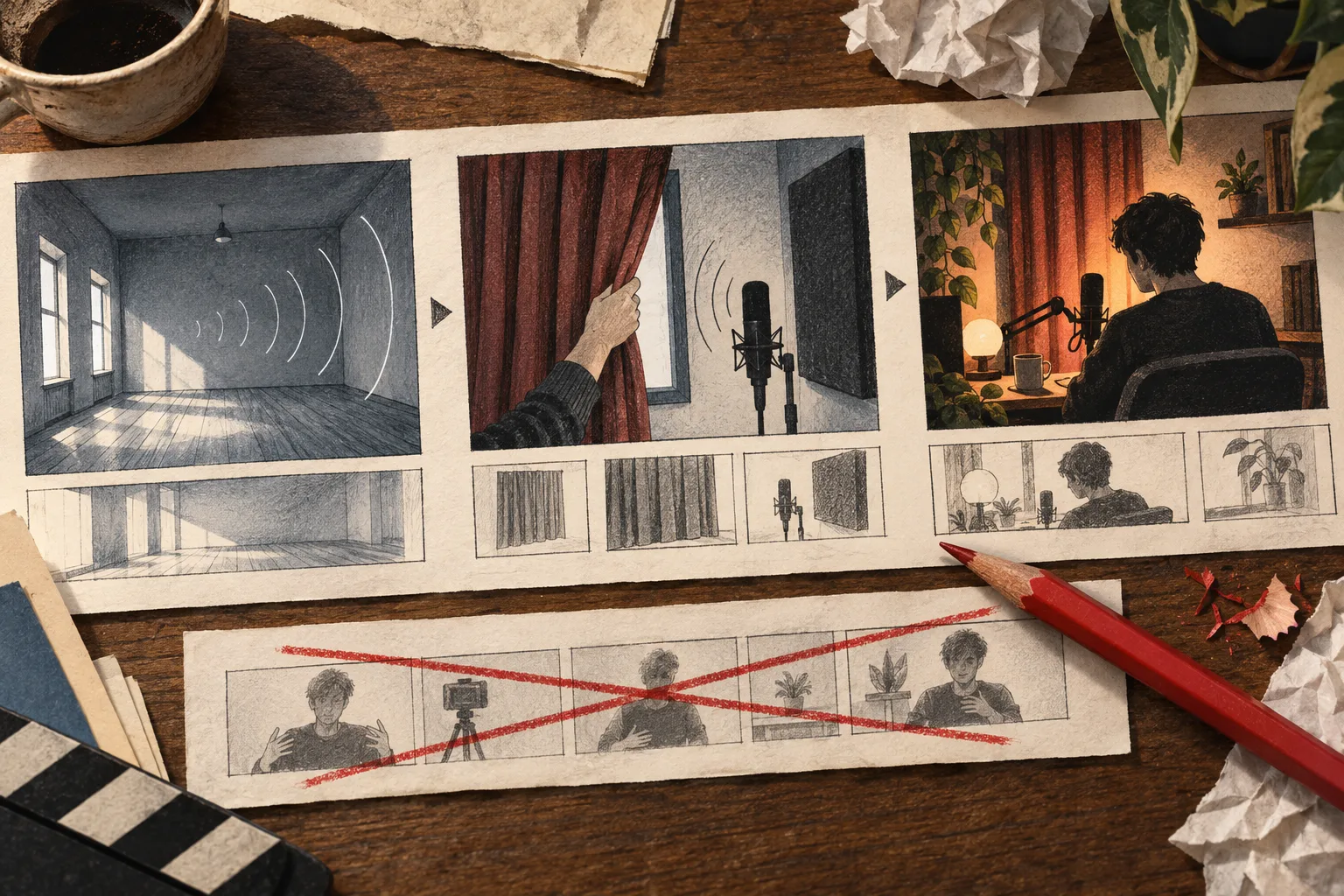
The quick answer
A useful hook creates a specific reason to continue and matches the video's actual payoff. Tutorials can show a result, tests can introduce an uncertainty, comparisons can establish a decision, and stories can reveal a meaningful problem. The wording should follow the evidence.
In this guide
Choose the mechanism before the sentence
A hook is not merely an attention-grabbing line. It is the connection between what the viewer cares about and what the video will resolve. Start by naming that connection.
If you are teaching a task, the viewer wants confidence that the result is achievable. If you are comparing options, they need criteria that fit their situation. If you are telling a story, they need a reason the outcome matters.
Tutorial: show the finished task
Example: “This folder is ready to send to a client. It has only five sections, and each one answers a question they would otherwise email you about.”
The hook works as a planning example because it shows a concrete outcome and introduces a practical reason for the structure. The video must then explain the sections using a real or clearly labeled example handoff.
Avoid claiming that the structure eliminates all client questions unless you have evidence for that stronger promise.
Test: introduce a fair uncertainty
Example: “These two lights cost very different amounts. I put them in the same windowless room to find out which differences you can actually see on a video call.”
The next section should establish the conditions and show the comparison. The uncertainty is meaningful because it concerns a real viewer decision, not a secret withheld only to prolong the video.
Comparison: define who is choosing
Example: “If your desk has to become a dining table every evening, a permanent monitor arm may solve the wrong problem. Here are two setups I can clear away without dismantling the whole workspace.”
The hook identifies the audience and the constraint. It gives the comparison criteria before discussing features. The finished video needs to demonstrate the clearing-away process rather than merely show attractive desk photos.
Troubleshooting: reproduce the symptom
Example: “If your recording sounds clear in headphones but hollow through speakers, listen to this short sample. We'll check the room, placement, and processing one at a time.”
The viewer can judge whether the symptom matches their situation. The script should avoid implying that every similar symptom has the same cause.
Story: make the obstacle concrete
Example: “I had one afternoon to turn this storage corner into a filming space, and the shelf I planned to use would not fit through the door.”
The obstacle gives the story direction. It only belongs in the opening if it actually mattered to the documented process. Do not manufacture a crisis that the rest of the video cannot support.
Review the hook against the payoff
For each draft, answer three questions: what does the viewer expect, what evidence will satisfy that expectation, and when does the video begin providing it? If the answers are vague, revise the premise before polishing the sentence.
Use Vidfora's Coach to compare opening approaches and identify unsupported claims. Keep your own examples, footage, and voice in the final script.
After publishing, review the opening with your own audience data and the actual packaging. A useful hook is part of a coherent experience. It cannot compensate indefinitely for a video that answers a different question from the one that earned the click.
Common questions
Should every hook begin with a question?
No. A demonstration, a concrete problem, or a surprising but accurate observation can establish the premise more directly. Choose the form that makes the viewer's reason to continue clear.
Can I reuse the same hook structure?
Yes, when it suits the content, but keep the substance distinct. Repeating a useful form is different from making every video deliver an interchangeable promise and payoff.
Published by Vidfora, the product discussed in these guides. Examples are illustrative unless a source is named. Editorial approach · Suggest a correction