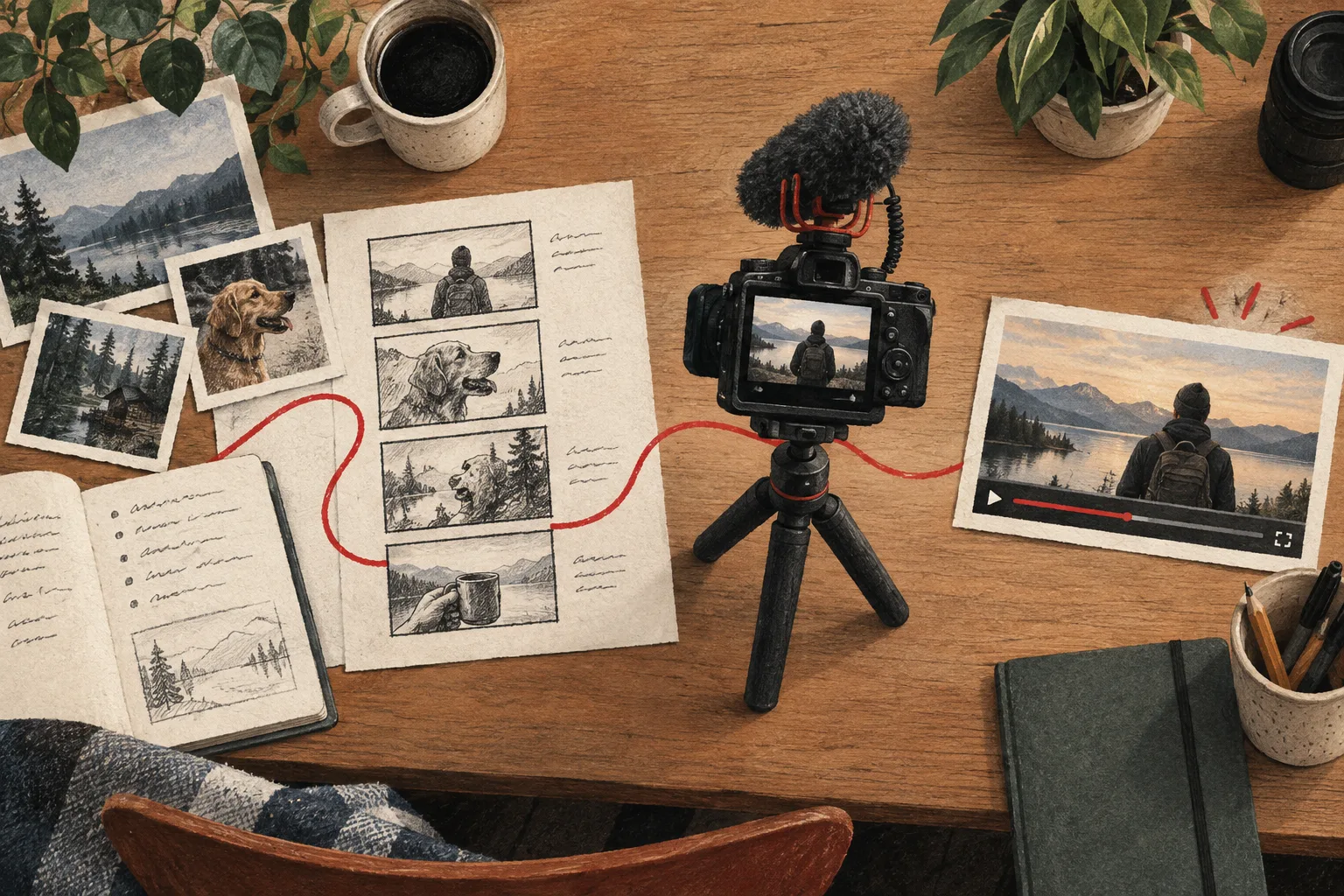
How long should a YouTube script be? Plan from the work on screen
Estimate runtime using your own speaking pace, demonstrations, pauses, and editing needs instead of writing to an arbitrary duration.
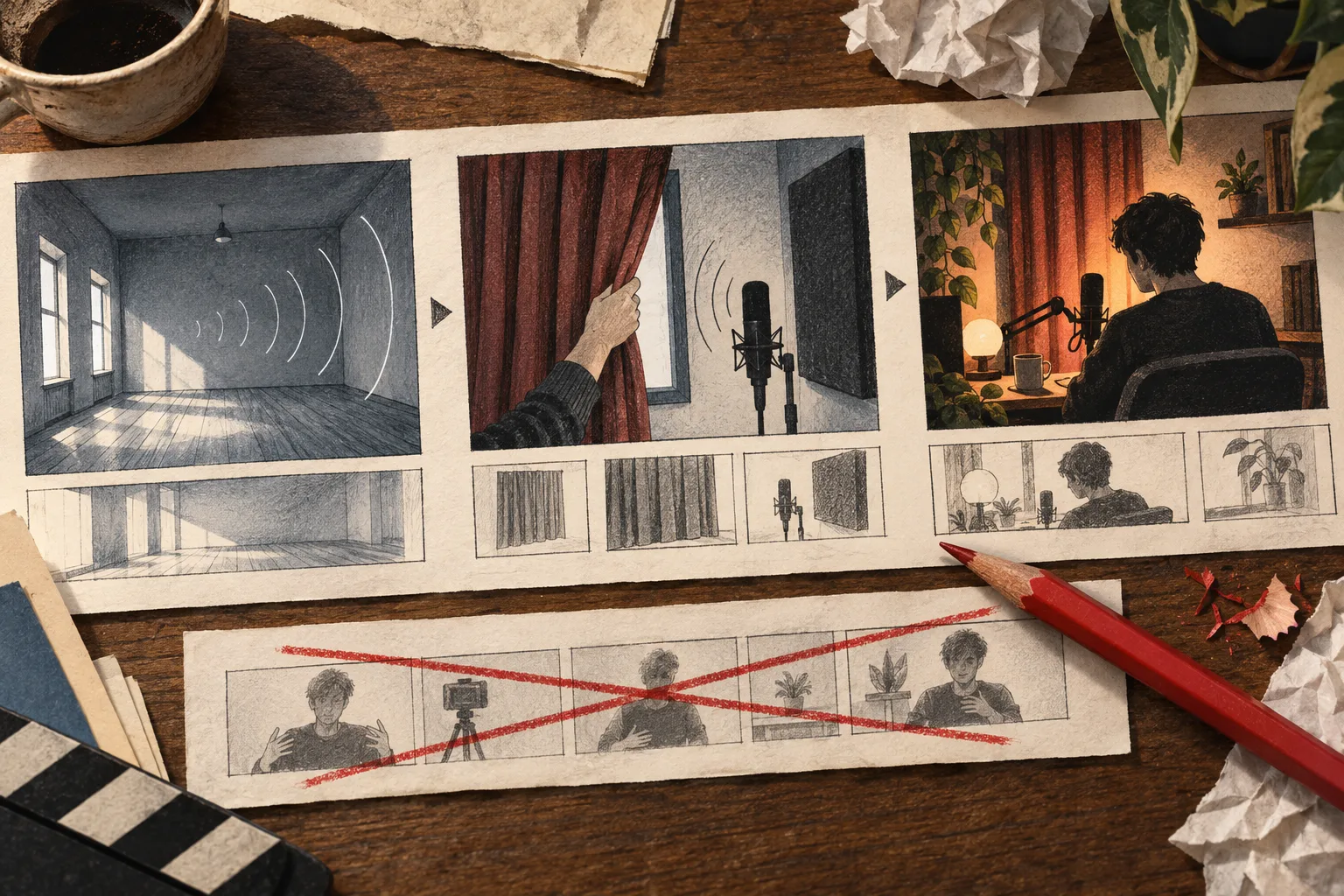
The quick answer
A script should be long enough to deliver the promised value clearly and short enough to avoid unnecessary material. Estimate runtime using your own spoken pace plus demonstrations and pauses. Word count alone cannot accurately predict the length of a finished video.
In this guide
Start with the complete answer
Decide what the viewer needs to understand or do. List the essential steps, evidence, and limitations. That defines the content before you choose a target runtime.
A simple setting change may need a short demonstration. A comparison involving several conditions may need more time. Expanding the first to match the second can create repetition; compressing the second too far can remove the information that makes the conclusion trustworthy.
Measure your own delivery
Read a representative section aloud at the pace you would use on camera. Time it and count the words. Use that observation as a rough planning input rather than borrowing a universal speaking-rate assumption.
Your pace may differ between storytelling, technical explanation, and voiceover. Leave room for breaths, emphasis, and the moments when the viewer needs to inspect something on screen.
Add nonverbal time explicitly
A demonstration can take time without adding many words. A before-and-after audio sample, a software action, or a visible process step may need a stable pause.
Create a simple timing sheet:
| Segment | Spoken estimate | Additional visual time |
|---|---|---|
| Opening comparison | Time your actual lines | Enough time to perceive the difference |
| Setup explanation | Time the draft | Show the relevant conditions |
| Main demonstration | Time the narration | Include actions the viewer must follow |
| Interpretation | Time the conclusion | Allow comparison of the results |
Do not count the same simultaneous narration and demonstration twice. The sheet should represent the sequence you intend to edit.
Use a hypothetical calculation carefully
Suppose your timed delivery is about 130 words per minute for this kind of explanation. A 650-word narration would take roughly five minutes before adding or subtracting visual-only sections and edit changes.
That is a planning estimate, not a recommended universal pace. A slower technical explanation may be more useful, and a concise conversational section may move faster. The viewer's comprehension is the practical constraint.
Cut by purpose
When a draft is too long, remove repeated setup, redundant examples, and detours before cutting necessary evidence. If two examples teach the same distinction, keep the clearer one. If a qualification materially changes the advice, preserve it in a more concise form.
When a draft feels too short, ask whether a demonstration or missing explanation would improve it. Do not add a generic introduction merely to reach a preferred runtime.
Rehearse the difficult sections
Technical instructions often look concise on the page but become awkward aloud. Read those sections while performing the task. You may discover that a step needs a visual label or that the narration runs ahead of the action.
Revise the script and production notes together. The goal is a sequence a viewer can follow, not a word-count target that forces the edit into unnatural pacing.
Use tools for structure, not a length guarantee
Vidfora's script workflow and Coach can help identify repetition and missing explanations. Ask for a shorter version that preserves specific claims and demonstrations, then compare what changed.
The right duration emerges from the promise, the evidence, and the delivery. A well-paced video respects the viewer's time by making every necessary minute useful.
Common questions
How many words should a ten-minute video contain?
There is no reliable single number. Measure your own delivery and account for demonstrations, pauses, and visual-only sections. A timed rehearsal is more useful than a generic words-per-minute rule.
Are longer videos always better for growth?
No. Length should fit the viewer's task and the content's value. Extra minutes that repeat or delay the answer can weaken the experience, while complex subjects may need more time to explain responsibly.
Published by Vidfora, the product discussed in these guides. Examples are illustrative unless a source is named. Editorial approach · Suggest a correction