Turn a YouTube research idea into a script without losing the evidence
Move from an interesting reference to an original premise, proof plan, outline, and filmable draft with a clear handoff at each step.
The quick answer
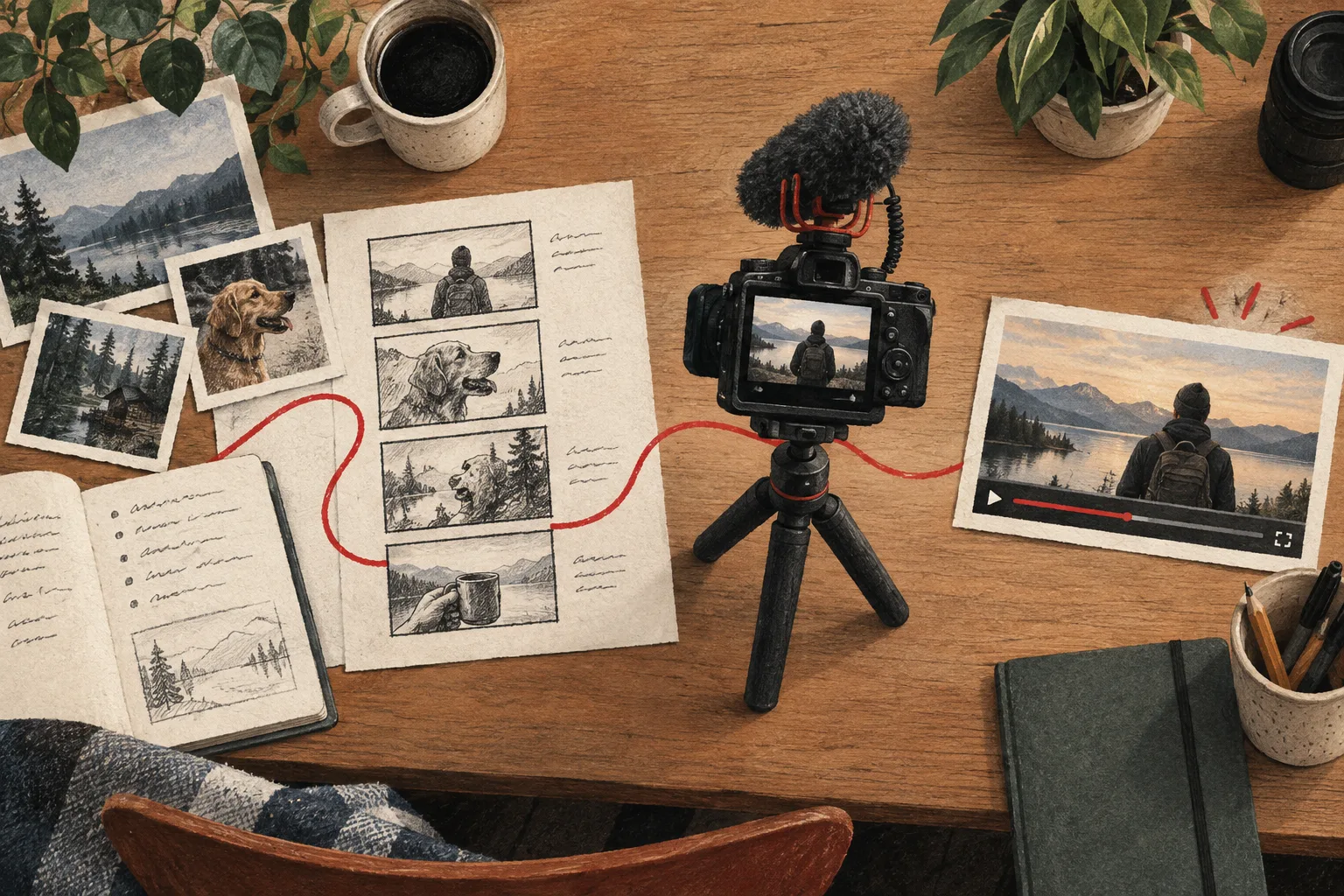
Turn an idea into a script by identifying the viewer need behind the reference, defining your original contribution, and planning the evidence before drafting. Carry the promise and source notes into the outline so the script develops the idea rather than merely imitating its surface.
In this guide
Explain why the reference matters
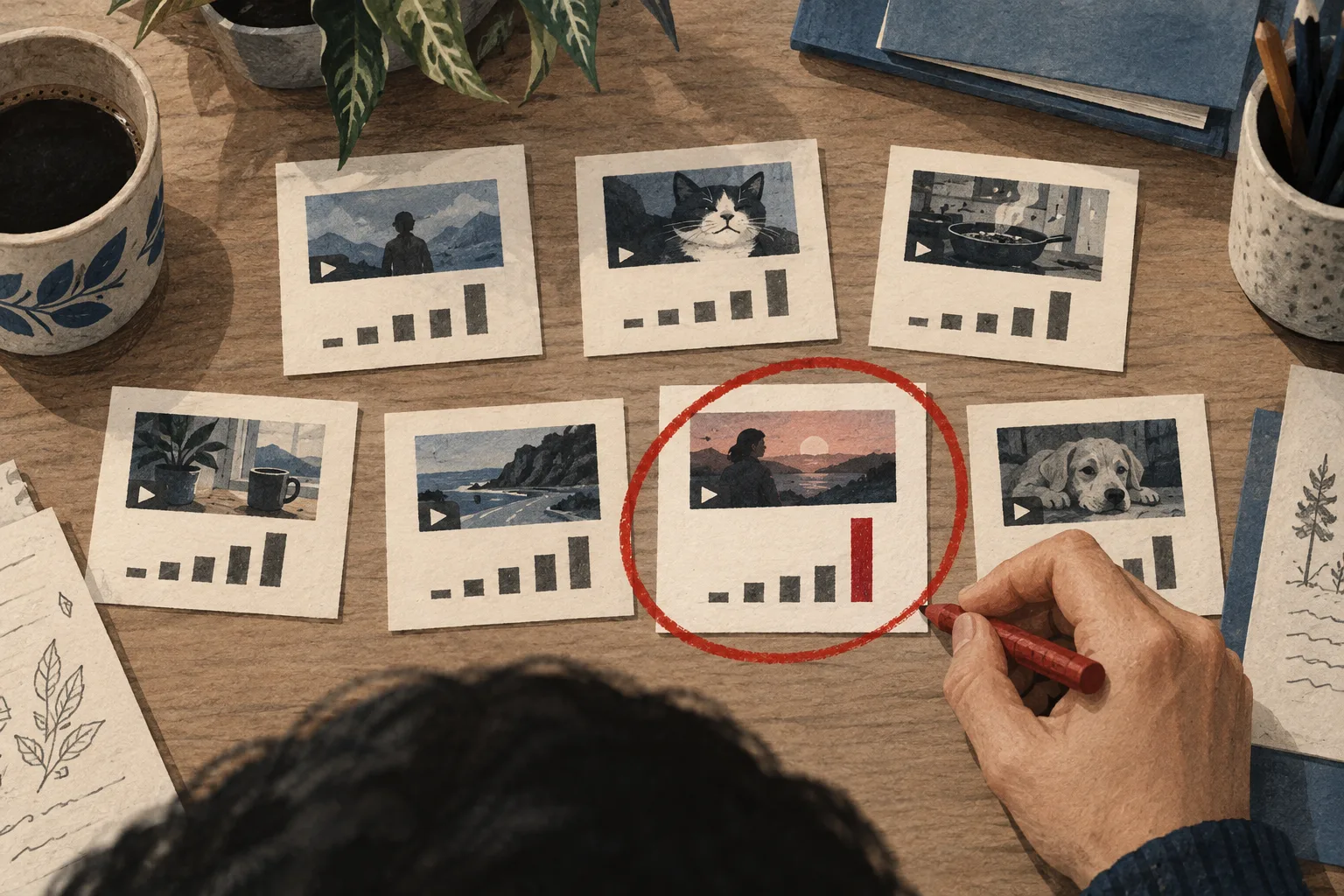
A saved outlier is not yet a script brief. Write what you learned from it: a neglected question, a useful constraint, a clear comparison, or a compelling demonstration.
Separate the observable feature from your interpretation. “The title emphasizes a small room” is visible. “Small rooms caused the breakout” remains a hypothesis. That distinction prevents the script from being built on a certainty the research never established.
Define your own contribution
Complete the sentence “Our video will add…” with something concrete. You might test a different condition, explain the process for a neglected audience, update an outdated walkthrough, or show original evidence.
If the contribution is only a rewritten title and a different presenter, return to the viewer problem. A familiar topic can support original work, but the new video needs its own useful reason to exist.
Write the promise and proof together
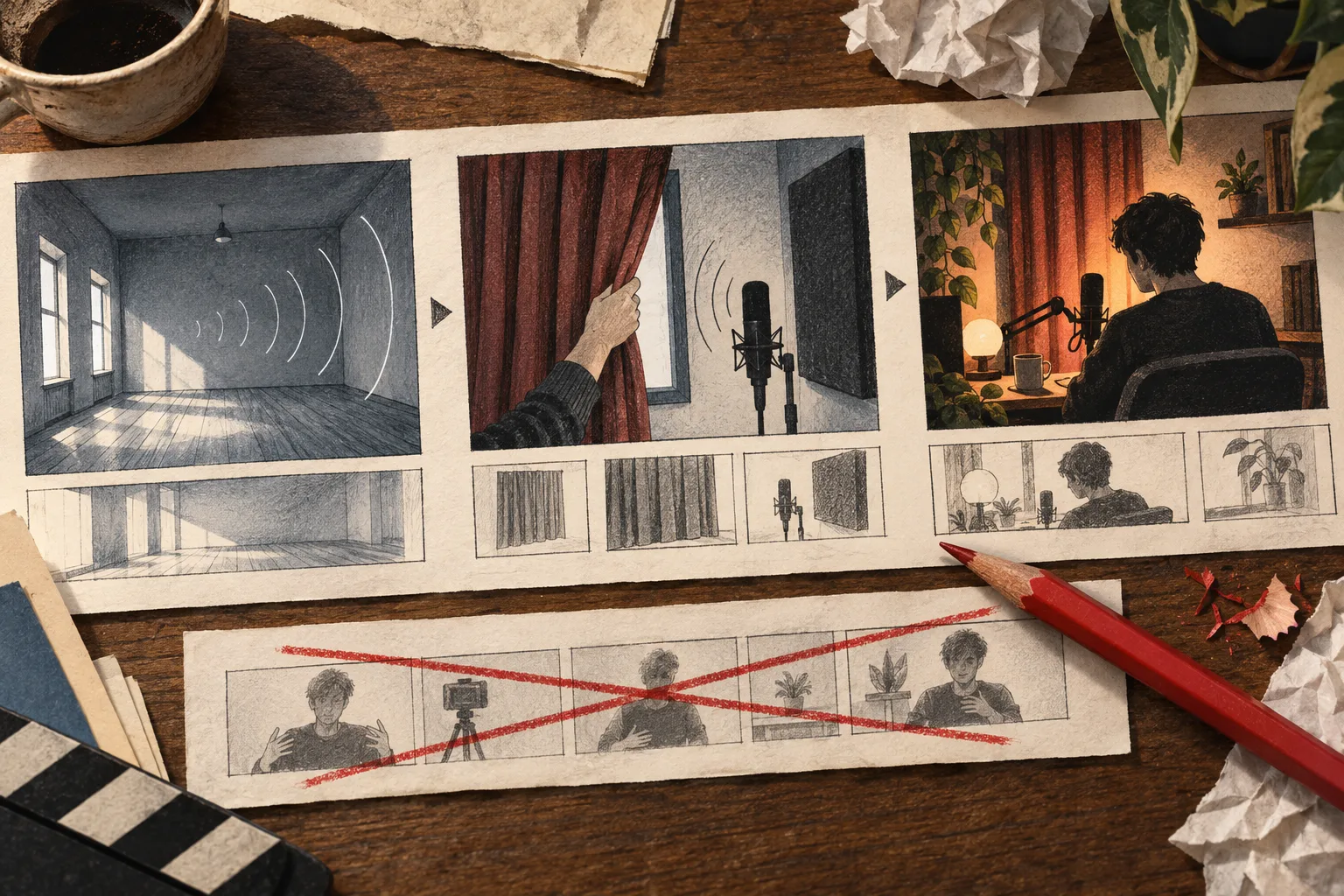
For a small-room recording idea, the promise might be helping renters hear which reversible changes affect their audio. The proof is a set of matched recordings with visible conditions.
Draft both before writing the introduction. If you cannot produce the proof, narrow the promise. This is cheaper and more honest than discovering during editing that the script's central claim cannot be supported.
Build the outline from viewer questions
List what the viewer needs to know in order: what the problem sounds like, what was held constant, what changed, what happened, and what they can try first.
Now group those questions into sections. Include only the context needed to interpret the evidence. Save broader background for a separate guide if it would delay the promised demonstration.
Add a source and visual layer
Next to each factual claim, attach the source or test note. Next to each explanation, state what appears on screen. This creates a script that can guide production rather than a polished essay with no footage plan.
Mark unresolved questions explicitly. Do not let an AI draft quietly fill them with plausible details. An honest placeholder in the working document is better than an invented answer in the final narration.
Draft the opening last enough to know the payoff
You can sketch an opening early, but finalize its promise after the evidence and sequence are clear. The first section should accurately prepare viewers for what the video delivers.
Read it beside the title-thumbnail pair. If the packaging promises a dramatic transformation while the script offers a modest comparison, revise the mismatch before filming.
Use the connected workspace deliberately
In Vidfora, begin with outlier research, save a focused board, and develop the project in Video projects. Use the Coach to challenge the outline or revise a specific passage rather than asking it to invent the whole premise from a vague topic.
Keep the reference links and decision notes close to the draft. The handoff is complete when another person—or you next week—can understand who the video serves, what it promises, why you chose it, and what evidence will make it useful.
Common questions
Should I write a script directly from a competitor's transcript?
Use references to understand the viewer need and creative principles, then build your own evidence, examples, and structure. Rephrasing another script is not the same as developing an original contribution.
What if the research contradicts my original idea?
Revise or reject the premise before production. The purpose of research is to improve the decision, including revealing when the planned promise is not well supported.
Published by Vidfora, the product discussed in these guides. Examples are illustrative unless a source is named. Editorial approach · Suggest a correction