A YouTube tool buying checklist based on one real project
Evaluate creator software through relevant evidence, workflow fit, limits, and a finished deliverable before adding another subscription.
The quick answer
Evaluate a creator tool by using it on one real video project and checking the quality of the result, the time it saves, and the limitations of the plan you would buy. Feature counts, promotional claims, and attractive screenshots are weaker evidence than a completed workflow.
In this guide
Define the job you need done
Write the problem in your current process: finding relevant examples, comparing performance, organizing references, refining scripts, or designing packaging. Be specific about where you lose time or make uncertain decisions.
A new tool is useful when it improves that job. A broad feature list can be appealing while leaving your main bottleneck untouched.
Bring a representative project
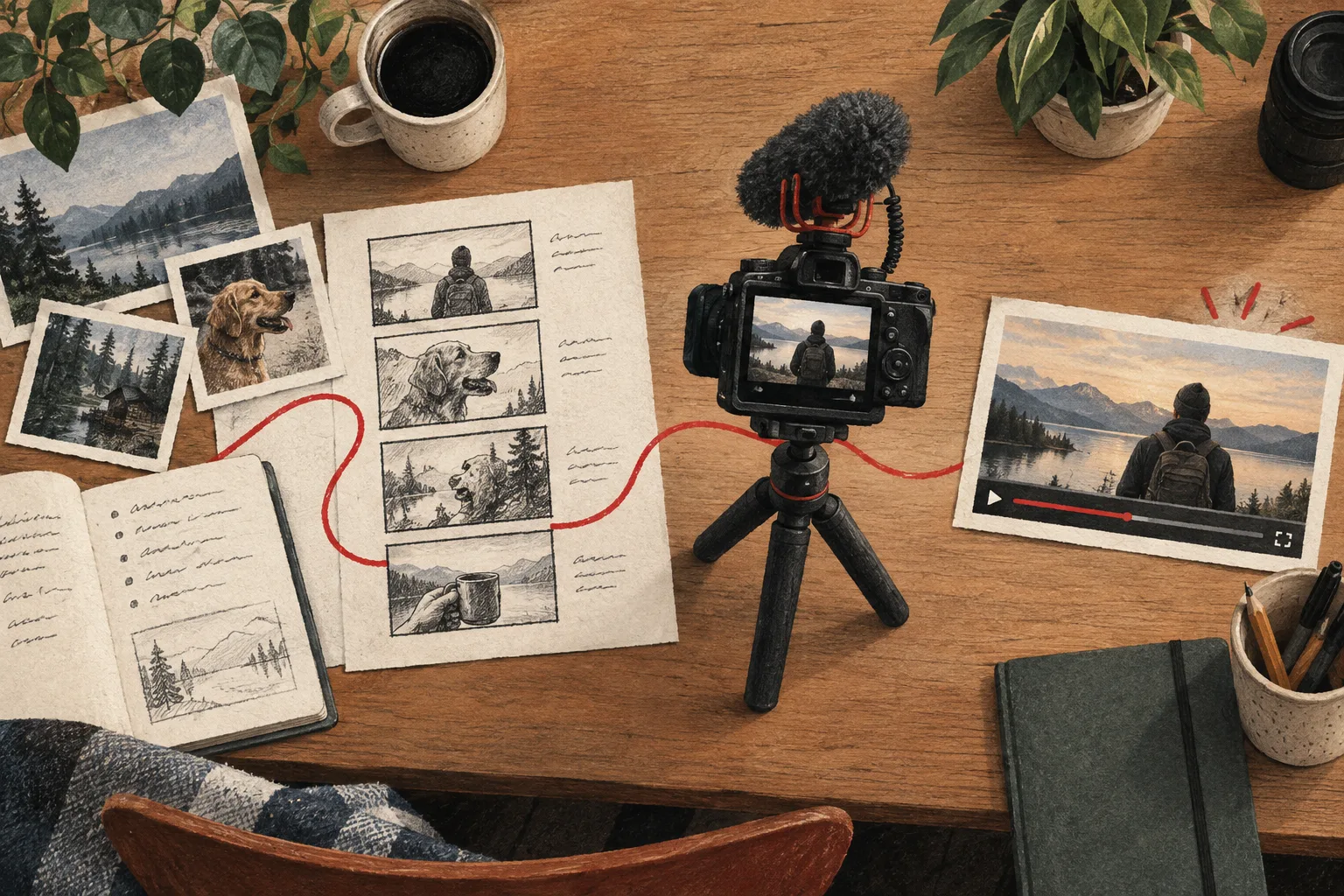
Choose a normal upcoming video, not an artificially easy demo task. Include the audience, constraints, and evidence you would ordinarily need. Use the same project when comparing alternatives.
At the end, keep the deliverable: a research shortlist, a production brief, a script revision, or a set of packaging concepts. That artifact makes the comparison concrete.
Ask how the information is produced
Distinguish observed data, modeled estimates, AI-generated suggestions, and manual inputs. A tool should make the difference understandable enough for you to use its output responsibly.
Ask what it cannot know. Public competitor research does not reveal private retention or actual revenue. A thumbnail preview does not measure future CTR. An AI draft does not verify every claim it contains.
Use this evaluation checklist
- Does the tool answer the question I actually brought?
- Can I inspect the evidence behind important results?
- Are relevant limits and uncertainty understandable?
- Can I save and recover the work without rebuilding it?
- Does the output connect to the next production stage?
- Are current plan limits suitable for a normal month?
- Can I export or retain the material I need?
- Is the interface clear enough to use repeatedly?
Do not award points for features you have no realistic plan to use. Extra options can add navigation and learning costs as well as value.
Count the full cost
Consider the subscription, setup effort, repeated handoffs, and time spent correcting outputs. A tool that produces a draft quickly may still be expensive in attention if every result needs extensive verification and restructuring.
Conversely, a connected workflow may justify its cost by preserving context across research, writing, and design. Measure that benefit during the project rather than assuming integration automatically saves time.
Verify the plan after the trial
Check which capabilities were available in the trial and which belong to the tier you would purchase. Review usage allowances, saved-work limits, and any features that depend on integrations or configuration.
Do not choose solely on a temporary discount. The useful question is whether the product fits your ongoing process at the actual price and access level you will use.
Evaluate Vidfora through the same standard
Try outlier research, organize references in Saved Boards, develop the idea with the Coach, and prepare packaging with the relevant creation tools. Use only the stages that match your needs.
The decision should be easy to explain afterward: “This helped me produce a better-supported brief with fewer repeated steps.” That is a stronger reason to buy than a promise that software will make every upload successful.
Common questions
Should I choose the tool with the most features?
Only if those features improve work you actually do. Relevant evidence, clear limits, and a usable workflow can matter more than breadth.
What is a good trial success criterion?
Choose a concrete deliverable and compare its quality and production effort with your current process. For example, finish a research-backed brief for a real upcoming video and record where the tool helped.
Published by Vidfora, the product discussed in these guides. Examples are illustrative unless a source is named. Editorial approach · Suggest a correction